You don’t need a big yard to grow your own veggies. A small patio has plenty of room to start.
Homegrown food tastes so good, and it can save you money at the store. Best of all, you don’t have to spend much to get started.
In this list, you’ll find easy ideas that cost very little. Many use things you may already have, like buckets, crates, and old jars.
Pick the ones you like and start small. Before long, you’ll be picking your own tomatoes, peppers, and herbs!
17 Budget-Friendly Patio Vegetable Garden Ideas
Most veggies need about six to eight hours of sun each day. Watch your patio for a day to find the sunniest spot.
Almost any pot will work if it has holes at the bottom for water to drain out. Buckets, crates, and old tubs are cheap and do the job well.
Tomatoes, peppers, lettuce, and herbs grow well in small spaces. Growing up on walls, fences, and hanging pots saves even more room.
1. Five-Gallon Bucket Tomatoes
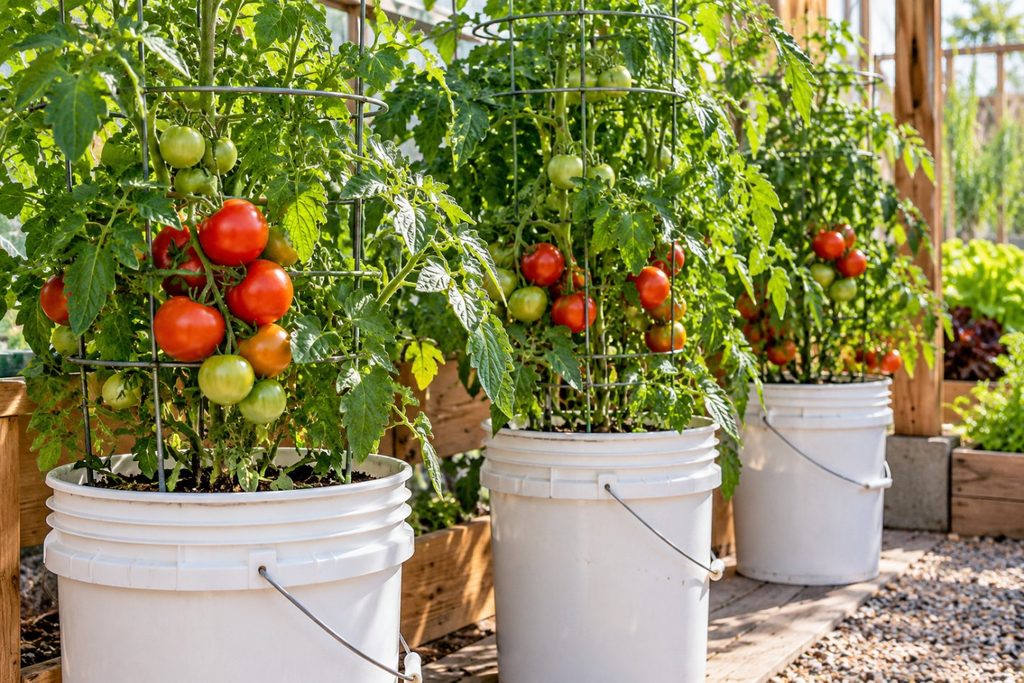
A big bucket makes a great home for one tomato plant. You can often find one for free or for just a few dollars.
Drill a few holes in the bottom so extra water can drain out. Fill it with good potting soil and plant the tomato deep, up to its first leaves.
Set the bucket in a sunny spot and water when the top soil feels dry. Add a stake or small cage early to hold the plant up as it grows.
Check this: 22 DIY Greenhouse Shelf Ideas
2. Pallet Vertical Garden
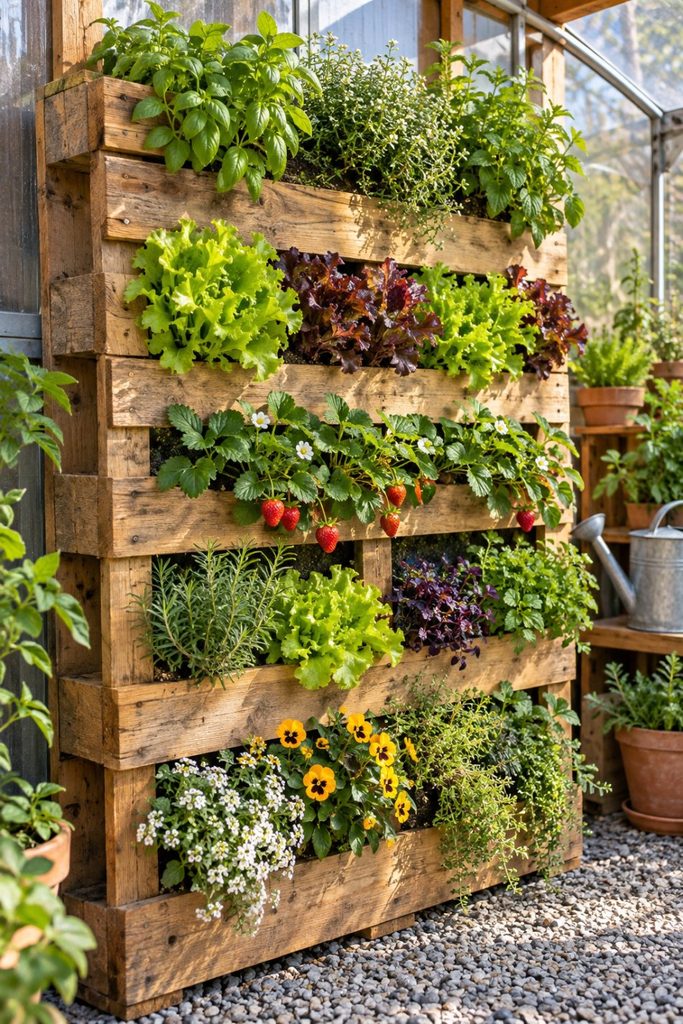
Floor space is tight on most patios, but wall space is often free. A pallet garden puts that empty wall to work.
Choose a clean pallet stamped “HT,” which means it was heat treated. Staple fabric over the back and bottom, fill the gaps with soil, and tuck in small lettuce, spinach, or herb plants.
Let the pallet lie flat for a week so the roots can settle in. Then stand it against a sunny wall and water it often, since the soil dries out fast.
3. Hanging Basket Cherry Tomatoes
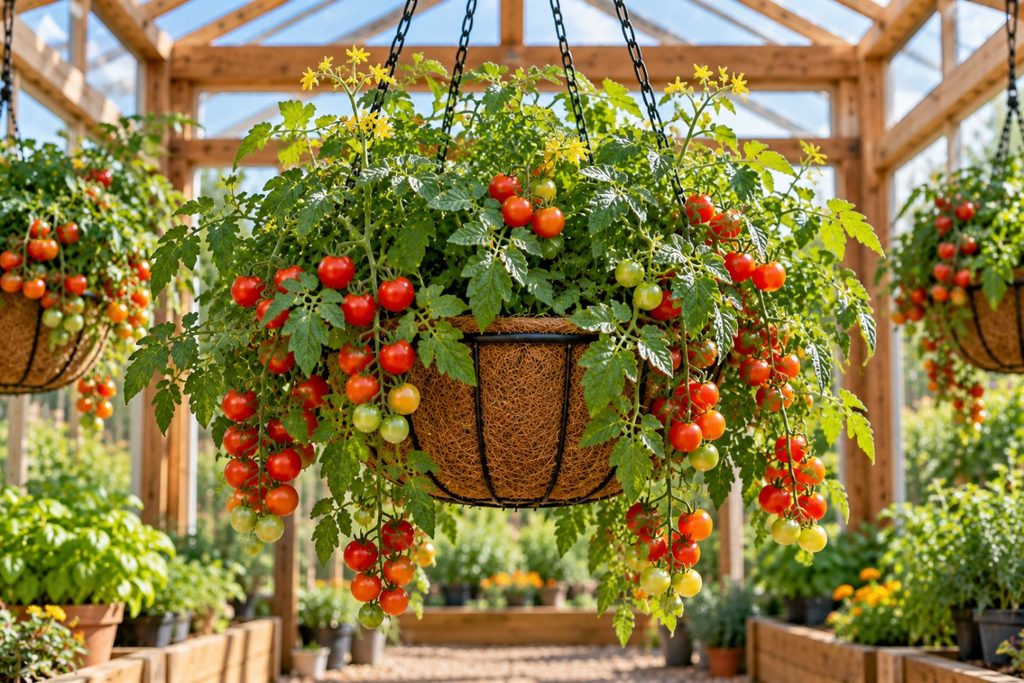
Cherry tomatoes were made for hanging baskets. Their vines spill over the sides, and the fruit hangs right where you can grab it.
Look for a “tumbling” type, which stays small and trails nicely. Line a basket with coco fiber and fill it with potting soil.
Hang it where it gets six to eight hours of sun. Baskets dry out fast, so water daily in hot weather.
4. Old Crate Lettuce Boxes
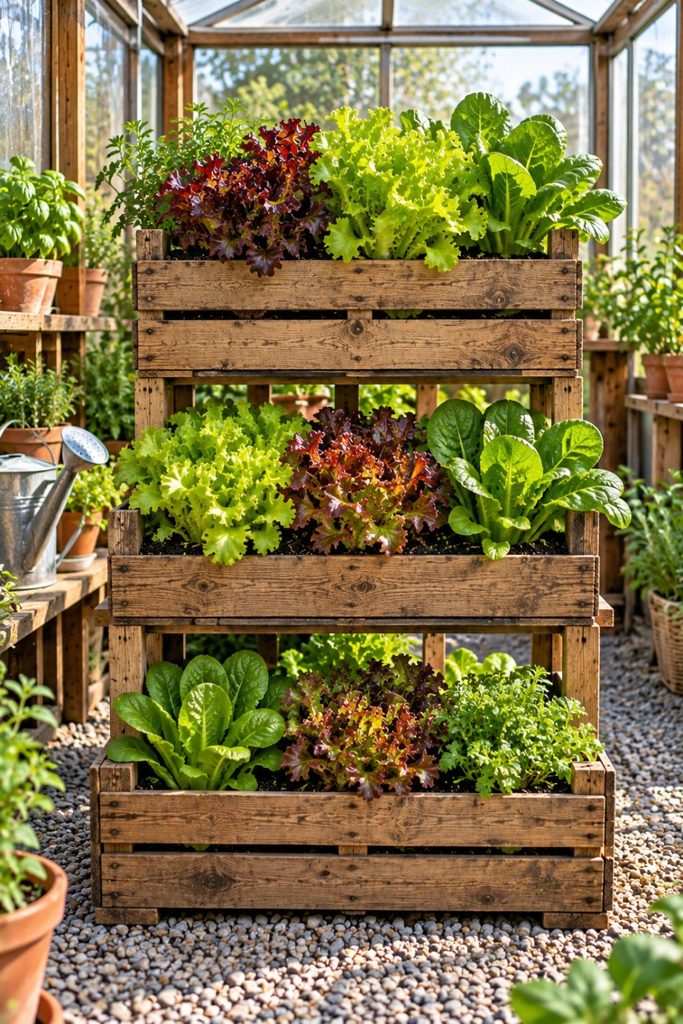
Wooden crates are cheap and easy to find at markets and thrift stores. Lettuce has shallow roots, so a crate gives it plenty of depth.
Line the inside with burlap or landscape fabric to keep the soil in. Then poke a few holes in the bottom so water can drain.
Fill the crate with potting soil and sprinkle the seeds thinly on top. Cover them with a light layer of soil and keep it damp.
Snip the outer leaves as they grow, and the plant will keep making more. Move the crate into shade when the afternoon sun gets too hot.
5. Grow Bag Potatoes
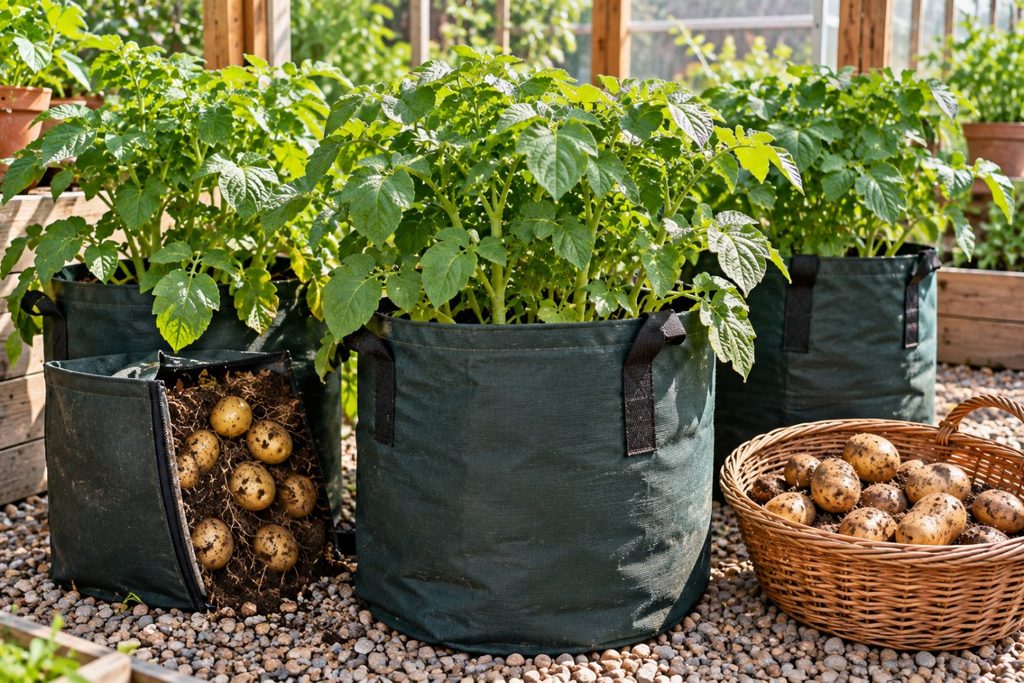
Potatoes need loose soil and lots of room, and a grow bag gives them both. Cloth bags cost little, and you can use them again next year.
Fill the bottom with a few inches of soil and set in your seed potatoes. As green shoots grow, keep adding soil until the bag is full.
Water when the top of the soil feels dry. When the leaves turn yellow and droop, dump out the bag and dig for your potatoes.
6. Trellis for Climbing Cucumbers
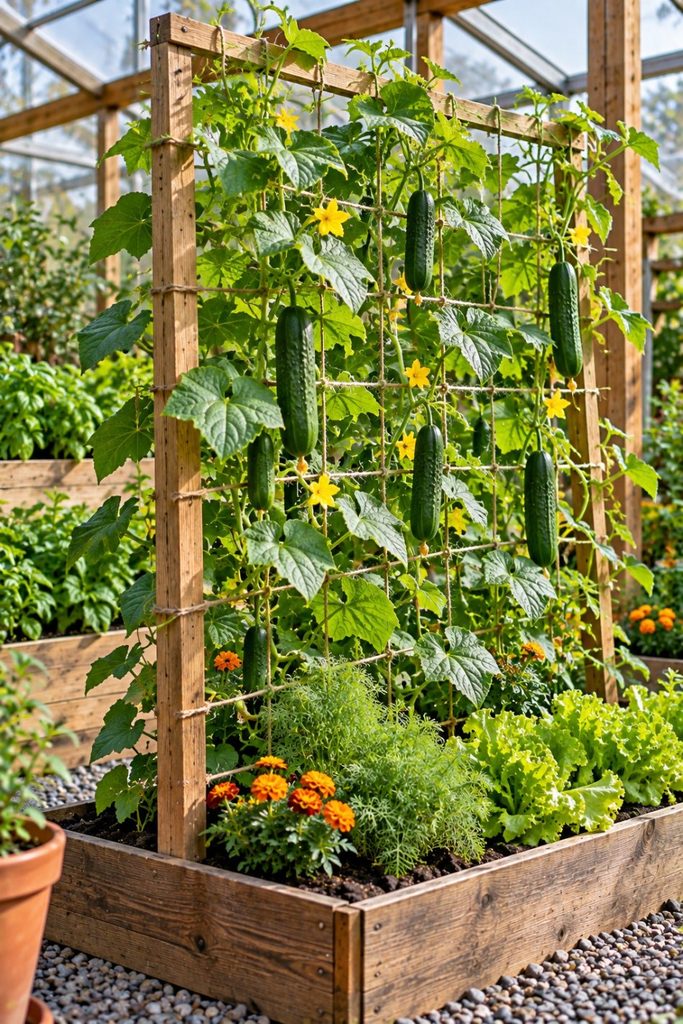
Cucumbers love to climb. A simple trellis keeps them off the ground and saves a lot of space.
You can use a tomato cage, a bamboo teepee, or string tied to a hook. Set it in a big pot before you plant so you don’t harm the roots.
Plant two or three seeds at the base of the trellis. Guide the vines onto it gently as they grow.
Cucumbers need lots of sun and water. Pick them while they are young and firm so the plant keeps making more.
Also Read: 22 Beautiful Outdoor Plant Stand Ideas for Your Garden
7. Rain Gutter Greens Rail
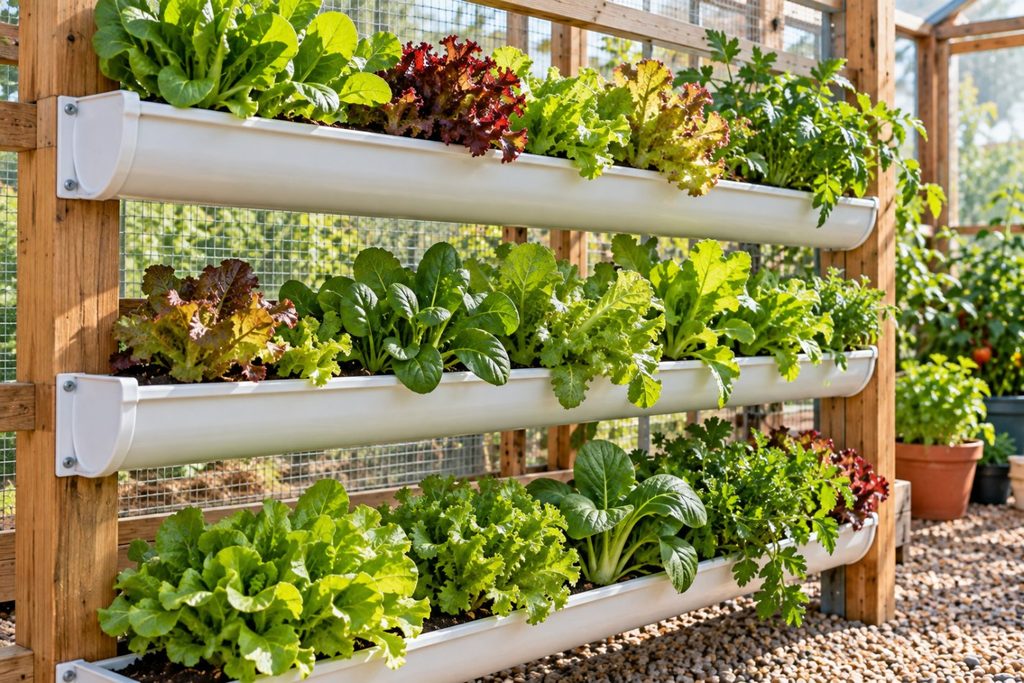
Old rain gutters make slim, shallow planters. They are just right for salad greens.
Cut a gutter to fit your railing or wall, and drill drainage holes along the bottom. Add end caps and hang it with hooks or strong wire.
Fill it with potting soil and plant spinach, arugula, or baby lettuce. Water often, since shallow soil dries out quickly.
8. Tiered Ladder Shelf Garden
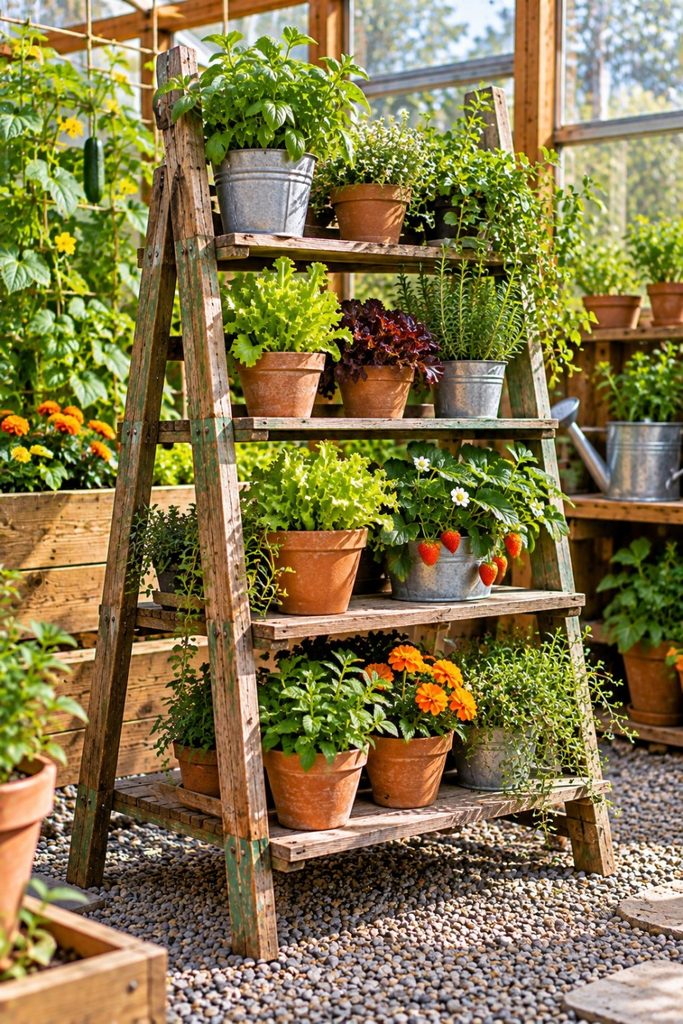
An old wooden ladder makes a fun plant stand. Each rung holds a pot, so you fit more plants into less space.
Lean the ladder against a wall and make sure it stands firm. Set small pots on the steps and keep the big, heavy ones at the bottom.
Put sun-loving herbs and peppers on the top steps. Shade-friendly greens will do fine on the lower ones.
Water the top pots first, and the extra drips down to the ones below. Add a coat of outdoor sealer to keep the wood from rotting.
9. Tire Planter Peppers
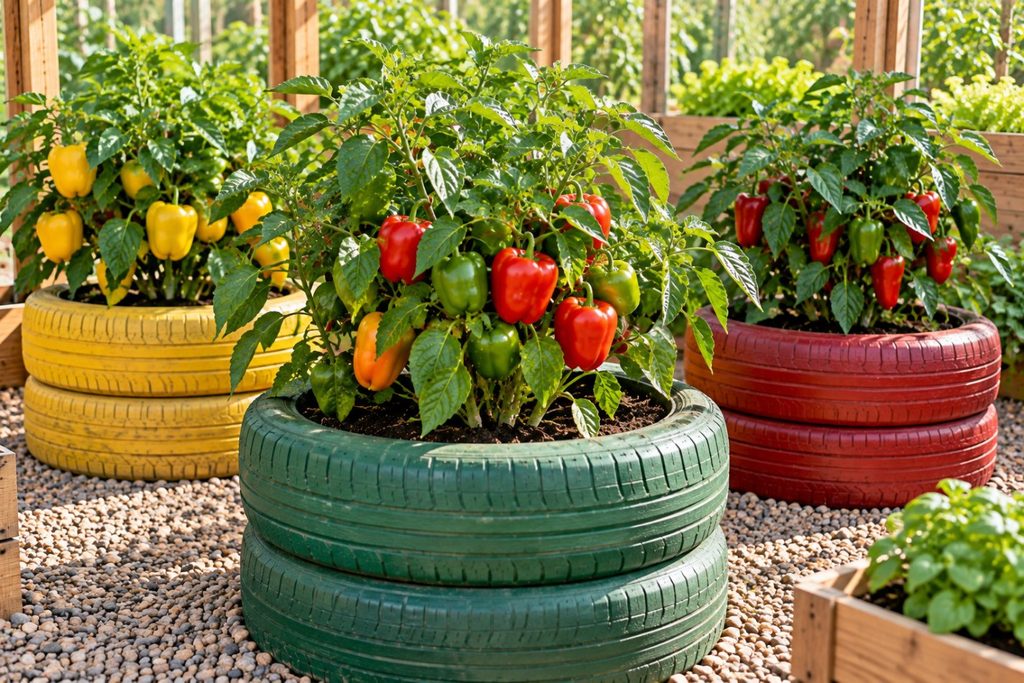
A stack of old tires can turn a bare corner into a pepper patch. Tires are often free at repair shops.
Old tires can leak bits into the soil, so line the inside with thick plastic. Poke a few holes in the plastic so water can drain.
Fill the tire with potting soil and plant one or two pepper plants. The dark rubber holds heat, which peppers love.
10. Green Onions Regrown from Kitchen Scraps
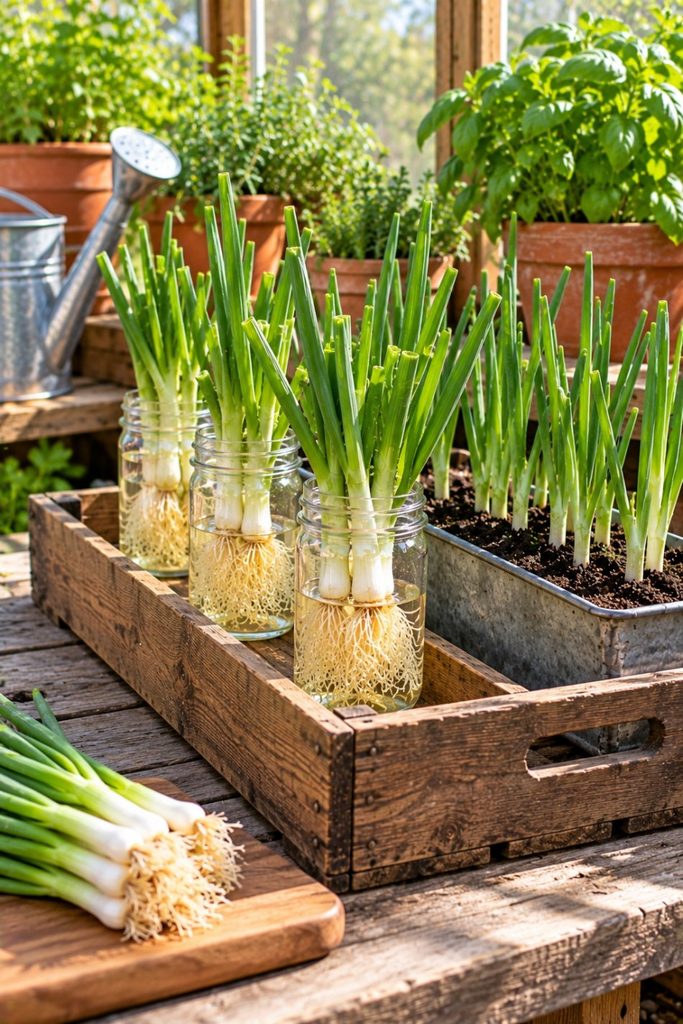
Don’t toss the white ends of your green onions. They can grow into new plants for free.
Cut the onions about an inch above the roots and use the tops in your cooking. Set the root ends in a small jar with an inch of water on a sunny sill.
Change the water every few days. In about a week, you will see new green shoots.
Move them to a pot of soil on your patio for stronger growth. Snip the tops as you need them, and they keep growing back.
11. Hanging Shoe Organizer Garden
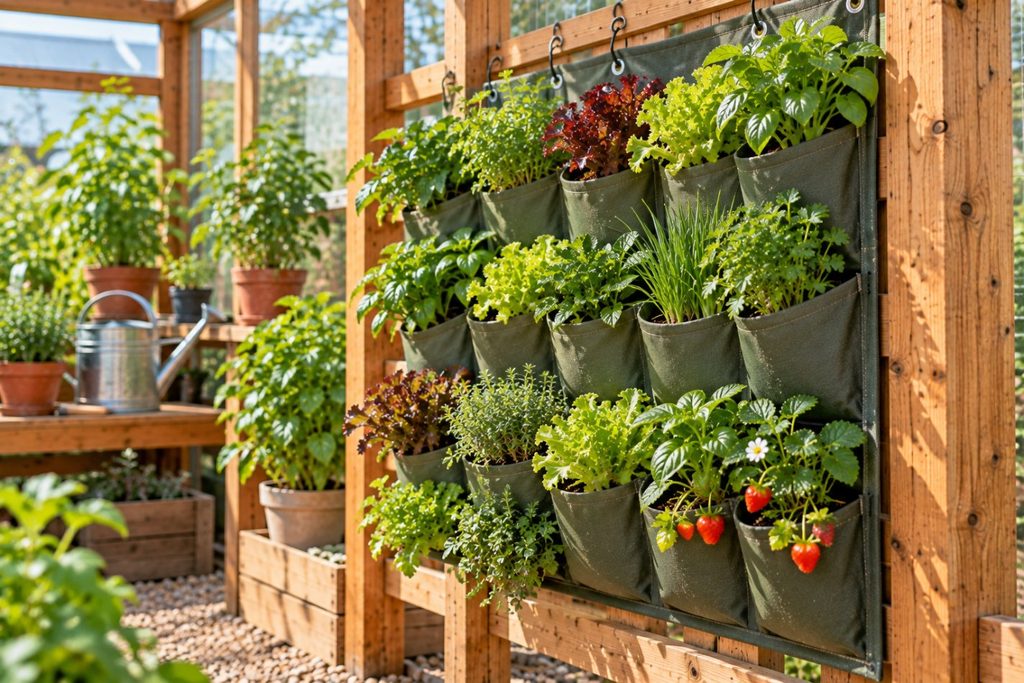
A hanging shoe organizer gives you a whole wall of little planters. Each pocket holds one small plant.
Pick one made of sturdy cloth, and hang it on a fence or sunny wall. Poke a few small holes in the bottom of every pocket for drainage.
Fill the pockets with soil and add herbs, lettuce, or strawberries. Water the top row slowly, and the extra drips down to the rest.
Check this: 19 Vegetables You Can Grow Hydroponically
12. Wooden Crate Radish and Carrot Bed
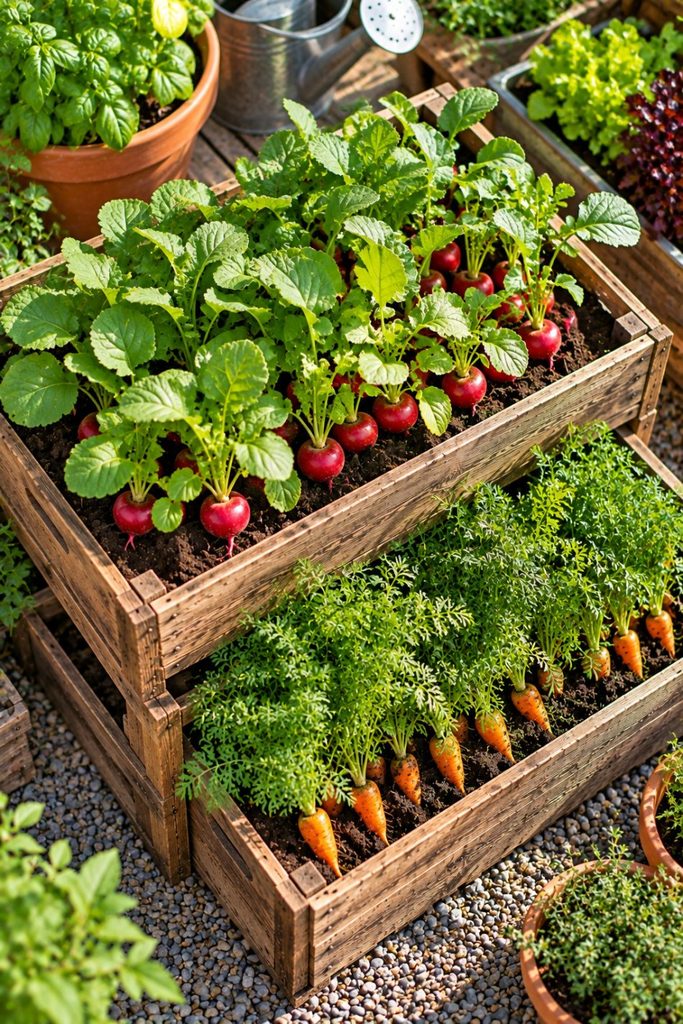
Radishes and carrots grow under the soil, so they need a deeper home than leafy greens. A stack of two crates or one deep wooden box does the job well.
Line the sides with fabric and make sure the bottom has drain holes. Fill it with loose soil that has no rocks or clumps.
Sow the seeds thinly and cover them with a thin layer of soil. Radishes can be ready in about a month, while carrots take a bit longer.
Thin the tiny sprouts so each plant has room to grow. Keep the soil damp, since dry spells can make roots split.
13. Bean Teepee in a Big Pot
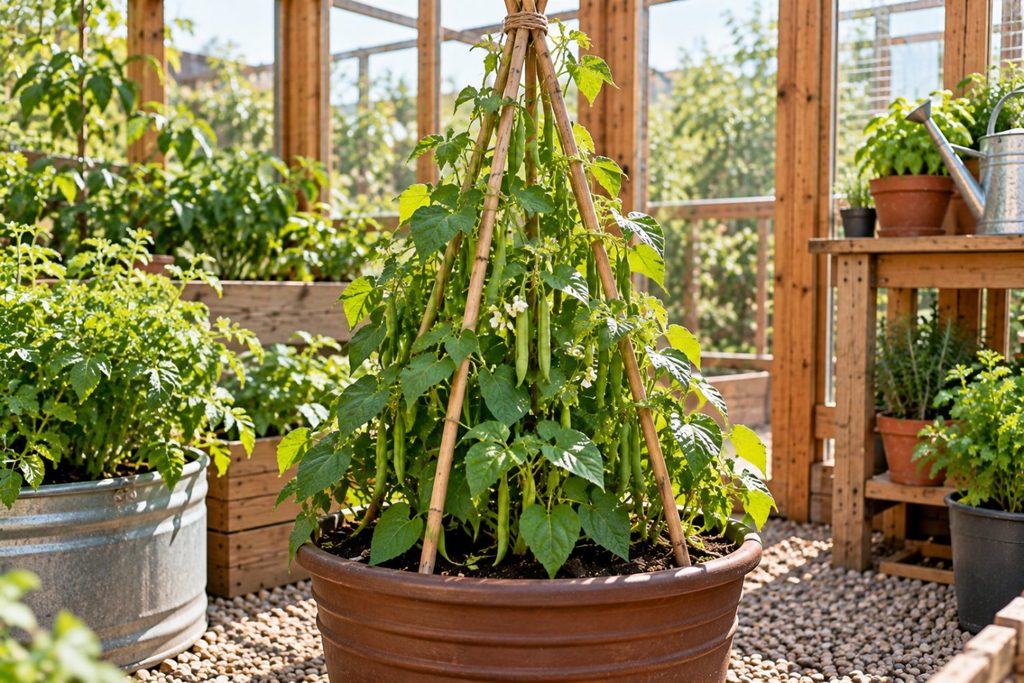
Pole beans love to climb, and a teepee gives them an easy way up. It also looks pretty on a patio.
Push three or four tall bamboo poles into a large pot and tie them together at the top. Plant a few bean seeds at the base of each pole.
The vines will wind up the poles on their own. Water often and pick the beans while they are young and tender.
14. Storage Tote Garden Bed
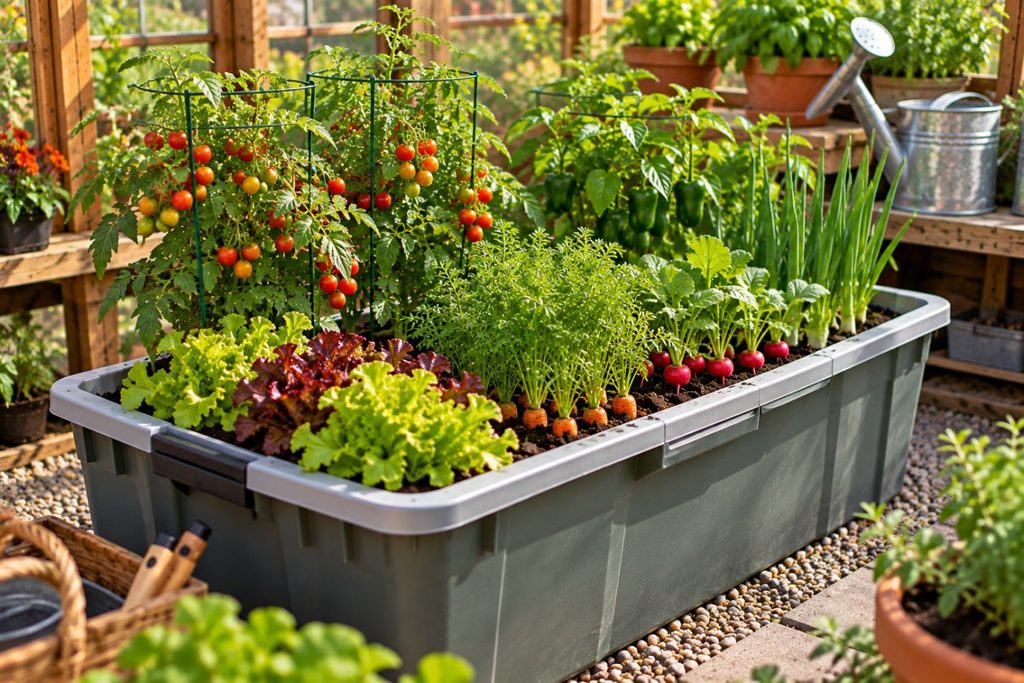
A plastic storage tote is like a mini raised bed. It is light, cheap, and easy to move.
Drill a row of holes in the bottom and a few more along the lower sides. Set the tote on bricks so water can flow out freely.
Fill it with potting soil and plant a mix of veggies, like lettuce, beets, and bush beans. Choose a tote that is at least ten inches deep.
Dark totes can get hot in strong sun, so pick a light color if you can. Slide the lid under the tote to catch drips and protect your patio floor.
15. Railing Planter Boxes
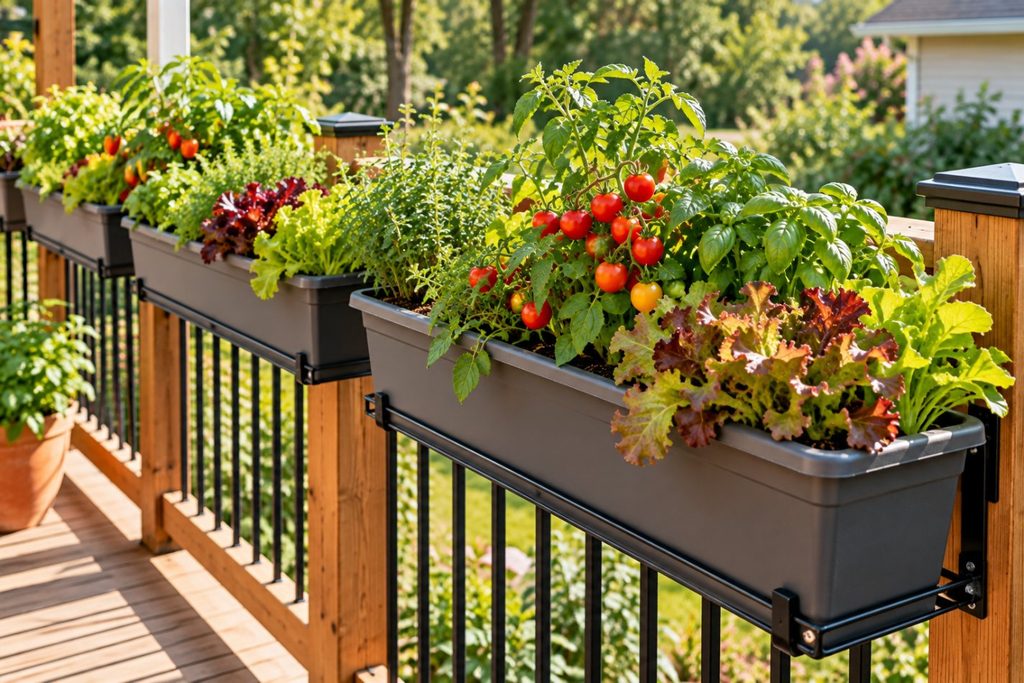
Your patio railing is a great place to grow food that would otherwise take up floor space. Planter boxes that hook over the rail cost very little, and they keep your veggies close and easy to pick.
Make sure your railing is strong enough to hold the weight of wet soil. Fill the boxes with light potting mix instead of heavy garden dirt, and use brackets or straps to hold them tight when the wind blows.
Herbs, baby lettuce, radishes, and green onions all do well in shallow boxes. Set a small tray under each one so water doesn’t drip onto your neighbors below.
16. Self-Watering Plastic Bottle Pots
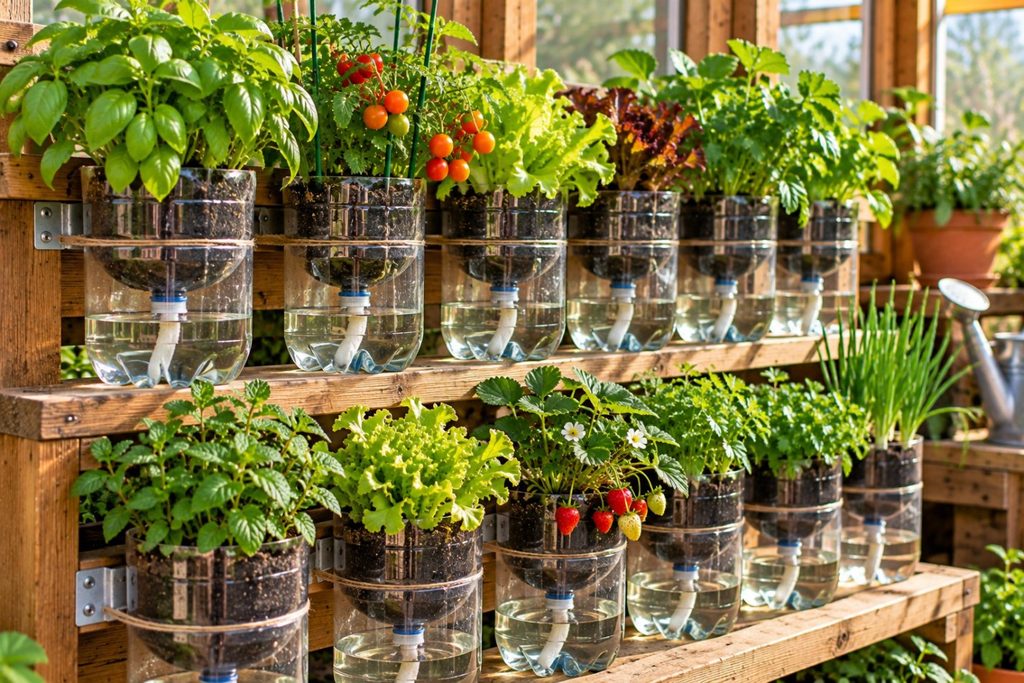
Old plastic bottles can water your plants for you. This is a great way to keep pots damp on busy days, and the bottles are free.
Wash a large soda bottle and cut it in half with sharp scissors. Poke a small hole in the cap and thread a strip of cotton cloth or thick string through it. This will act as a wick.
Flip the top half upside down and set it into the bottom half, like a funnel. Fill the bottom with water, and fill the top with soil. The wick slowly pulls water up to the roots.
Basil, lettuce, and other herbs grow well this way. Just top off the water every few days, and place the bottles where they get plenty of sun.
Also Read: 18 Low-Cost Raised Vegetable Garden Ideas
17. Compost Bucket for Free Plant Food
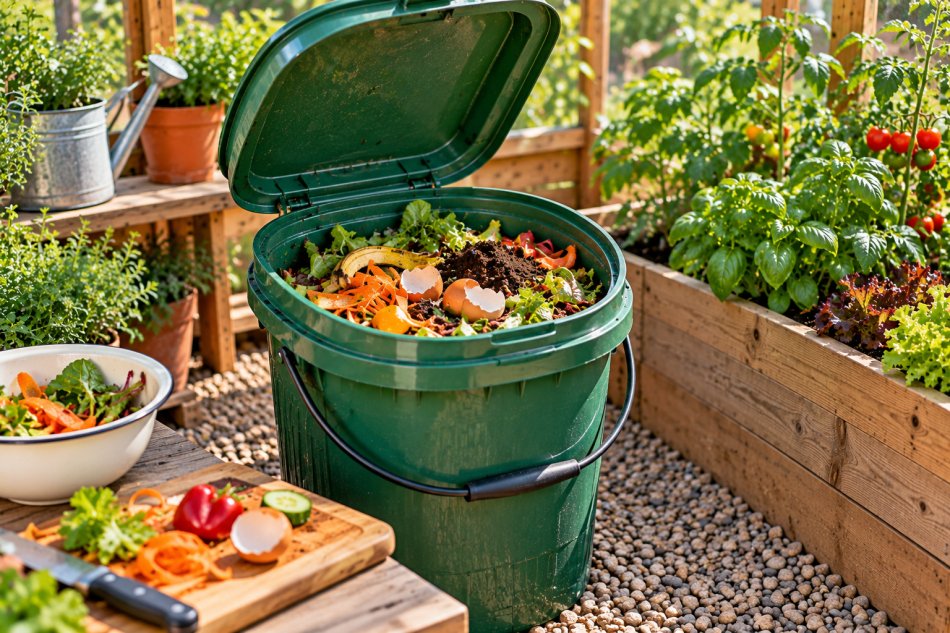
Your kitchen scraps can turn into rich food for your plants. A simple bucket with a lid is all you need, and it fits neatly in a corner of your patio.
Drill a few small holes in the sides and bottom so air can move through. Add fruit and veggie scraps, coffee grounds, and crushed eggshells. Skip meat, dairy, and oily foods, because they smell and attract pests.
Toss in dry leaves or torn paper each time you add scraps, and stir it every week or so. In a couple of months, you will have dark, crumbly compost. Mix a handful into your pots to help your veggies grow strong.
Conclusion
Growing your own veggies on a patio doesn’t have to cost a lot. With a few buckets, crates, and old bottles, you can turn a small space into a food garden.
Start with just one or two ideas that fit your space and sunlight. Once you see how easy it is, you can add more each season.
Keep the water coming, give your plants plenty of sun, and be patient. Soon you’ll be enjoying fresh, homegrown food right outside your door.