Your greenhouse might be feeling a little crowded these days. Pots are sitting on the floor, piled on the table, and maybe even blocking the door!
The good news is that you don’t need a bigger space. You just need to use the space you already have in a smarter, more helpful way.
Shelves are one of the easiest fixes. They lift your plants off the ground, let more sunlight reach each leaf, and give you lots of extra room to grow.
Below, you’ll find DIY greenhouse shelf ideas you can build on your own. Some are cheap, some are quick, and all of them are simple enough to try this weekend.
22 DIY Greenhouse Shelf Ideas
Shelves come in many shapes, like tiered stands, wall-mounted boards, hanging racks, and old pallet builds. Each one turns empty walls and corners into useful growing space.
Pick materials that can handle water and damp air, such as cedar, treated wood, or metal. Sturdy shelves last longer and hold heavy pots without bending or breaking.
Leave enough space between shelves so every plant gets light and fresh air. Put tall plants on the lower shelves and small seedlings up high where the sun is strongest.
1. Pallet Shelves
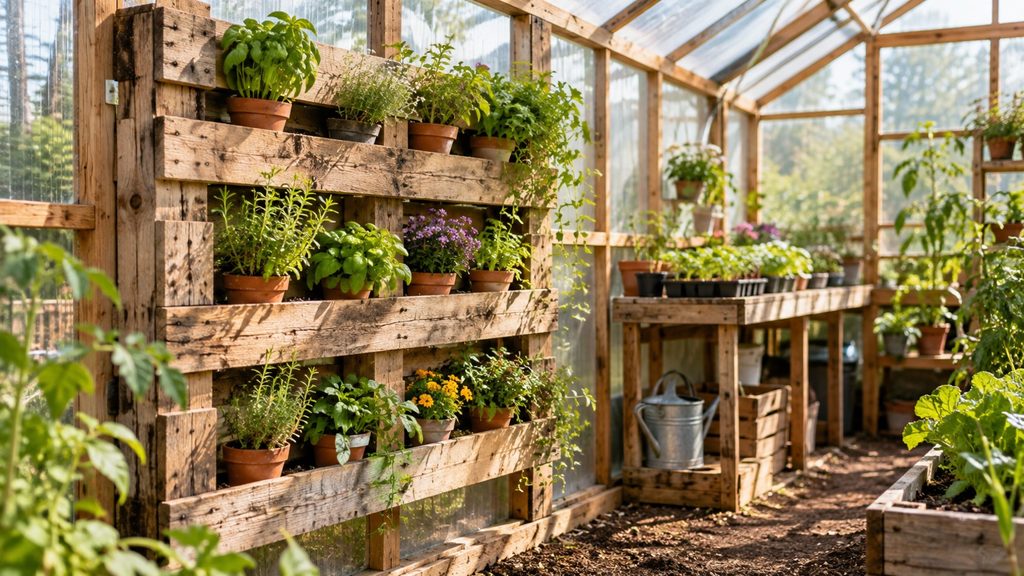
An old wooden pallet is one of the easiest ways to add shelf space to your greenhouse. Stand it upright against a wall, and the gaps between the boards turn into ready-made spots for small pots.
Start by cleaning the pallet well and sanding any rough edges. Then seal the wood so it can handle water, and screw it to the wall frame so it stays steady.
Pallet shelves are cheap, quick, and fun to build. They work best for herbs, seedlings, and small flowers that don’t weigh too much.
2. Tiered Plant Stand
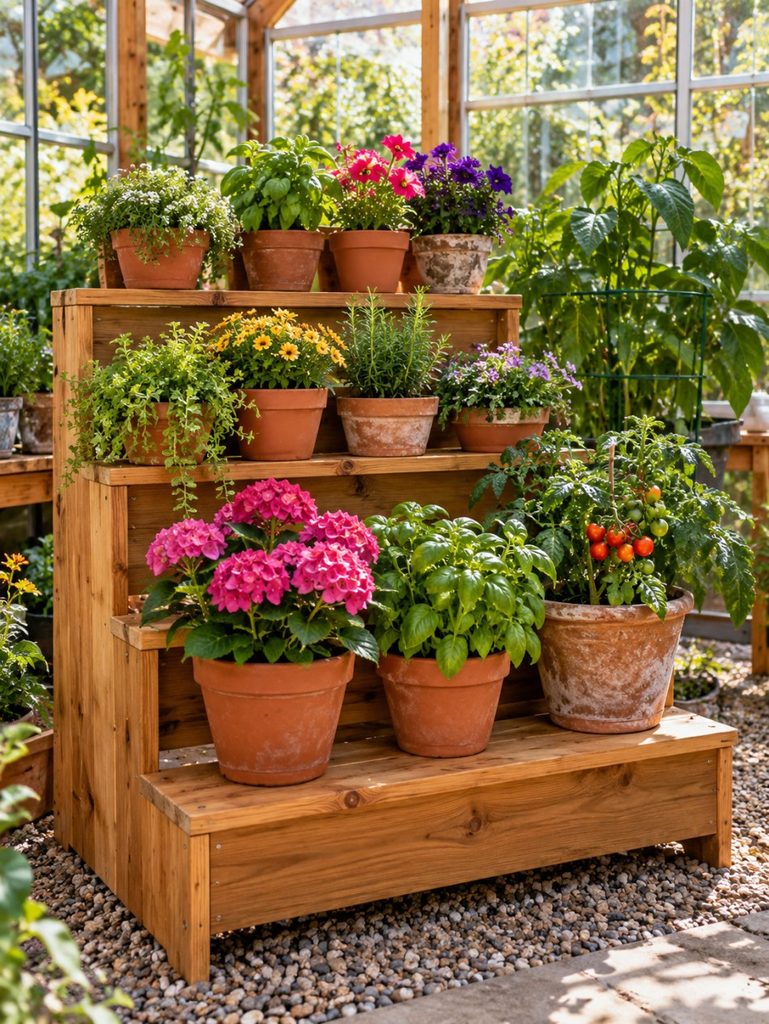
A tiered plant stand works like a small staircase for your plants. Each step holds its own pots, so every plant gets a spot in the sun without hiding the ones behind it.
Build it from three or four boards, with each step a little shorter than the one below. Use cedar or treated wood so it lasts, and sand the edges so they don’t scratch your hands.
This stand is great for flowers, herbs, and small veggies. Put the biggest pots on the bottom step and the tiniest ones on top.
Also Read: 19 DIY Mini Greenhouse Plans
3. Wall-Mounted Floating Shelves
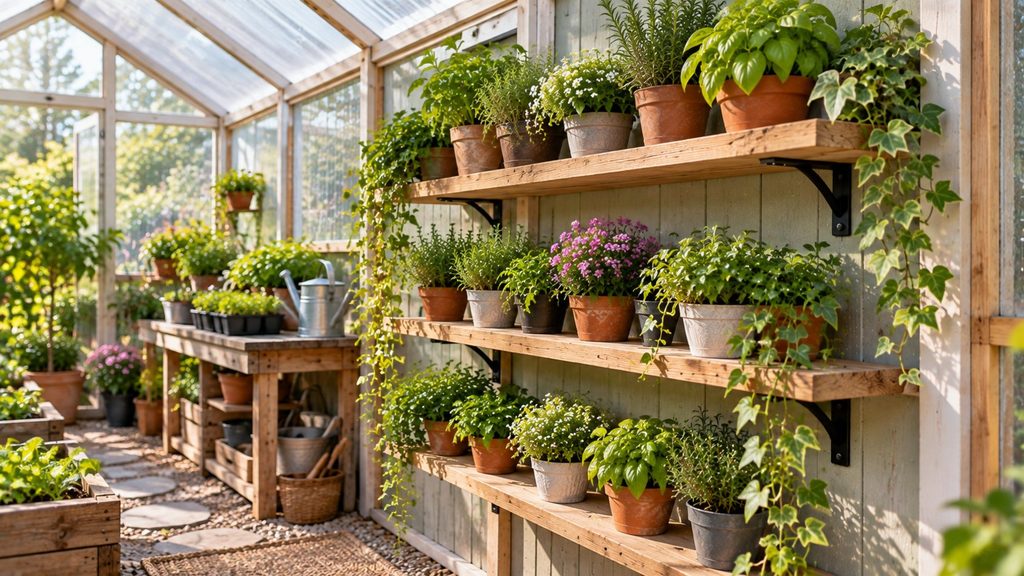
Floating shelves are boards fixed straight to the wall, so they take up no floor space at all. They keep your greenhouse open and tidy while giving your plants a place to sit.
Screw strong brackets into the wall frame, then set sturdy boards on top. Check that each shelf is level, and don’t load it with pots that are too heavy.
These shelves are perfect for seedlings, small herbs, and little flowers. They also keep your plants close to the light and away from the damp floor.
4. Ladder Shelf
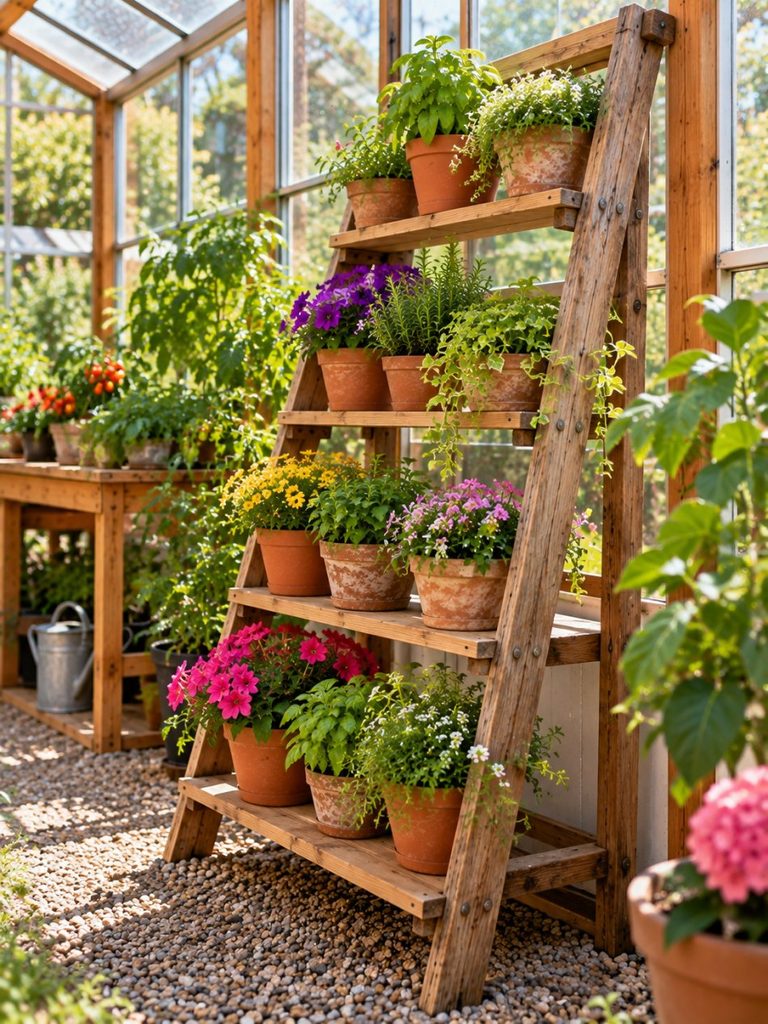
A ladder shelf is a simple way to give an old ladder a new job. Lean it against the wall, lay boards across the rungs, and you have a shelf with a lot of charm.
Pick a sturdy wooden ladder and make sure it stands firmly without wobbling. Cut boards to fit across the rungs, then sand them and seal the wood so water won’t harm it.
This shelf is great for pots of herbs, small flowers, and seedlings. You can also move the boards up or down to fit taller plants.
Check this: 22 Beautiful Outdoor Plant Stand Ideas
5. Hanging Shelves with Rope
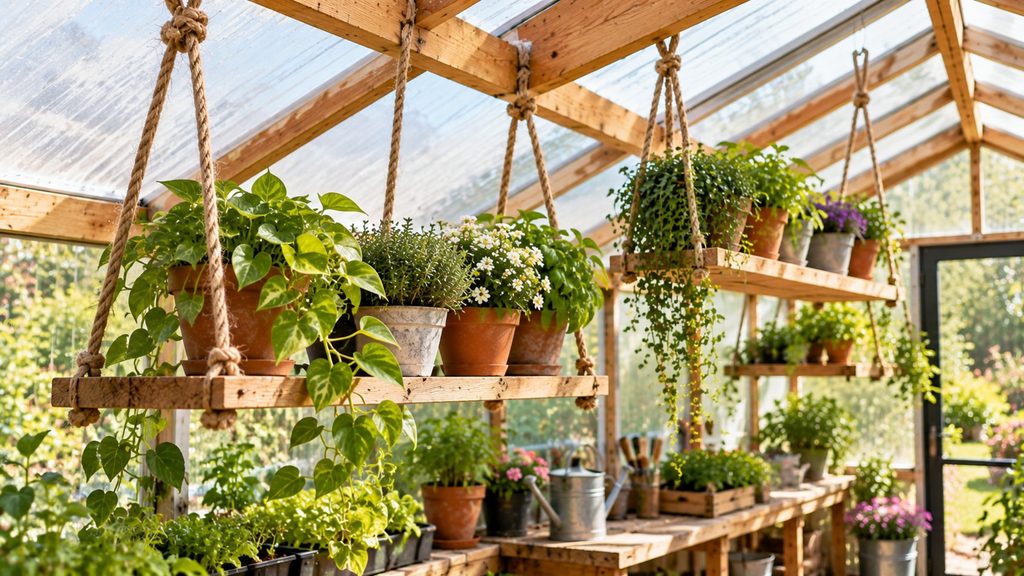
Hanging shelves use strong rope to hold boards in the air. They hang from the roof beams, so the floor and walls stay free for other things.
Drill a hole in each corner of the board and thread the rope through. Tie strong knots underneath, then hang the shelf from a solid beam.
Keep the shelf light, with small pots, herbs, and seedlings. Heavy pots can pull the rope loose or tip the board.
6. Cinder Block and Board Shelves
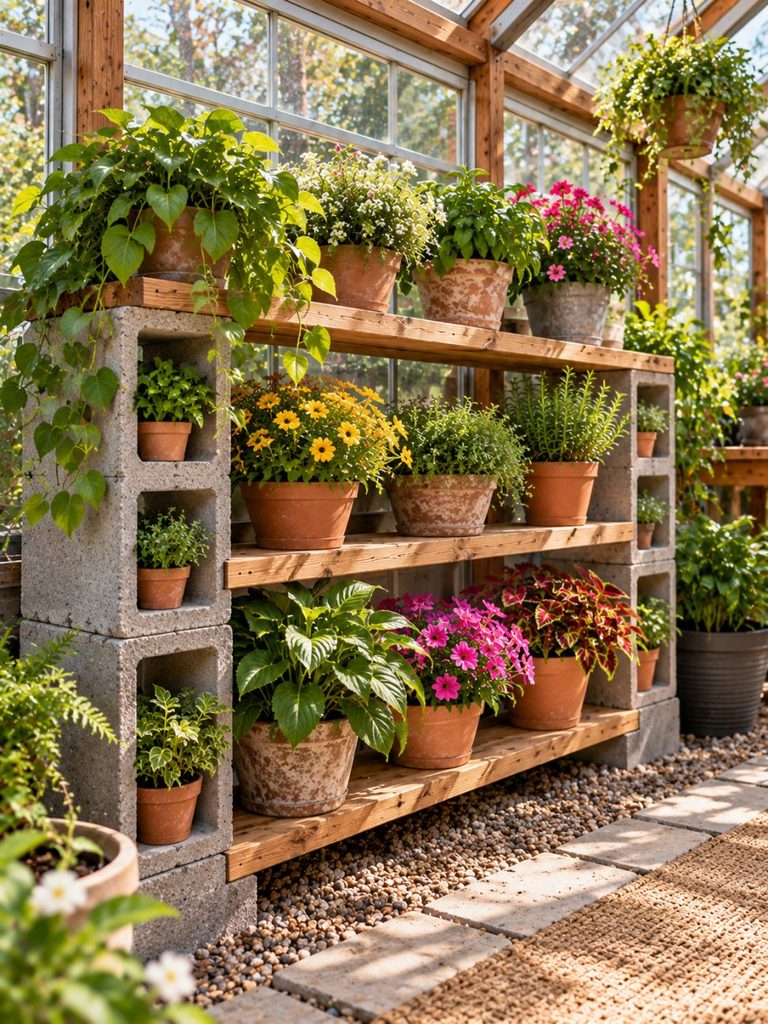
This shelf is one of the strongest and easiest to make, and it needs no special tools. All you do is stack blocks and lay planks across them.
Set two blocks on the floor, lay a board across, and repeat for the next level. Make sure the blocks sit flat and even so nothing wobbles.
The holes in the blocks are handy too. You can tuck small pots or herbs right inside them.
Because this shelf is so sturdy, it can hold big, heavy pots without any trouble. It’s a great choice for the floor level of your greenhouse.
7. Metal Wire Rack
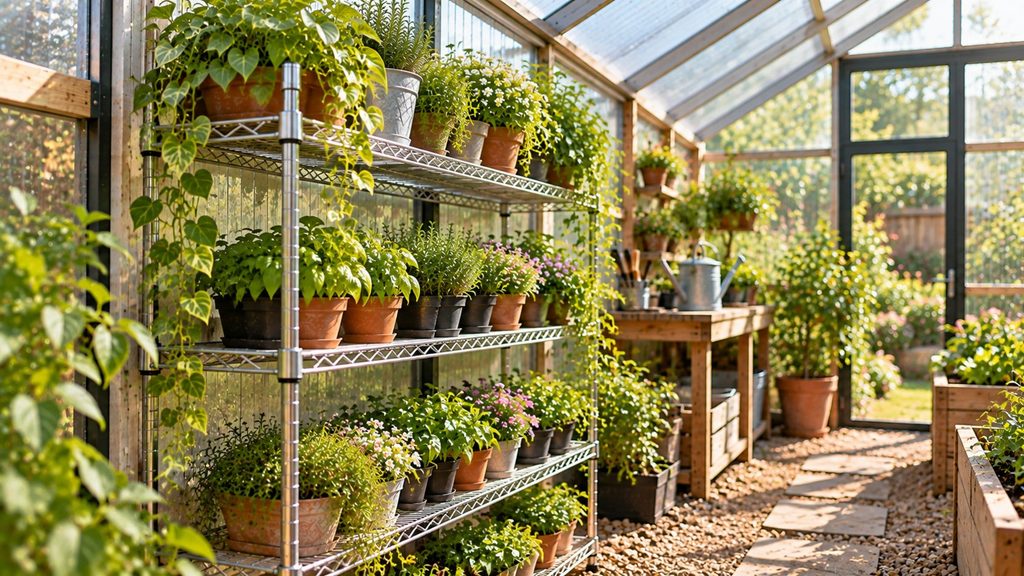
A wire rack from the kitchen or garage can work as a plant shelf. It’s ready to use, so there’s almost nothing to build.
Water drips right through the wire, which keeps the roots from sitting in puddles. Air moves freely around the plants, too.
Pick a rack with a rust-resistant coating, since a greenhouse is damp. Wipe it down now and then to keep it clean and strong.
8. Corner Shelf Unit
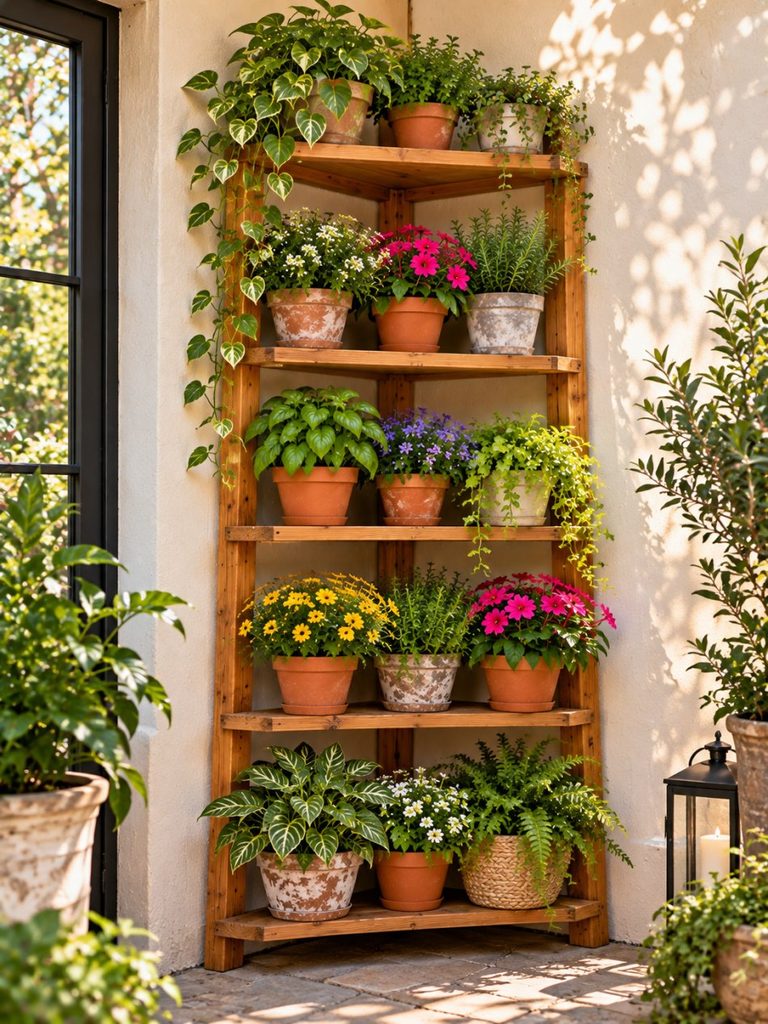
Empty corners are easy to forget, but they can hold plenty of pots. A corner shelf unit turns those tricky spots into useful growing space.
Cut boards into triangle shapes so they fit snugly into the corner. Stack them at different heights, and attach them to the wall frame with strong screws.
Leave enough room between the shelves so each plant gets light and air. Tall plants do best on the lower levels.
Corner shelves look neat and tidy, and they keep your walkways clear. They’re great for herbs, seedlings, and small flowering plants.
Also Read: 19 Vegetables You Can Grow Hydroponically
9. Crate Shelves
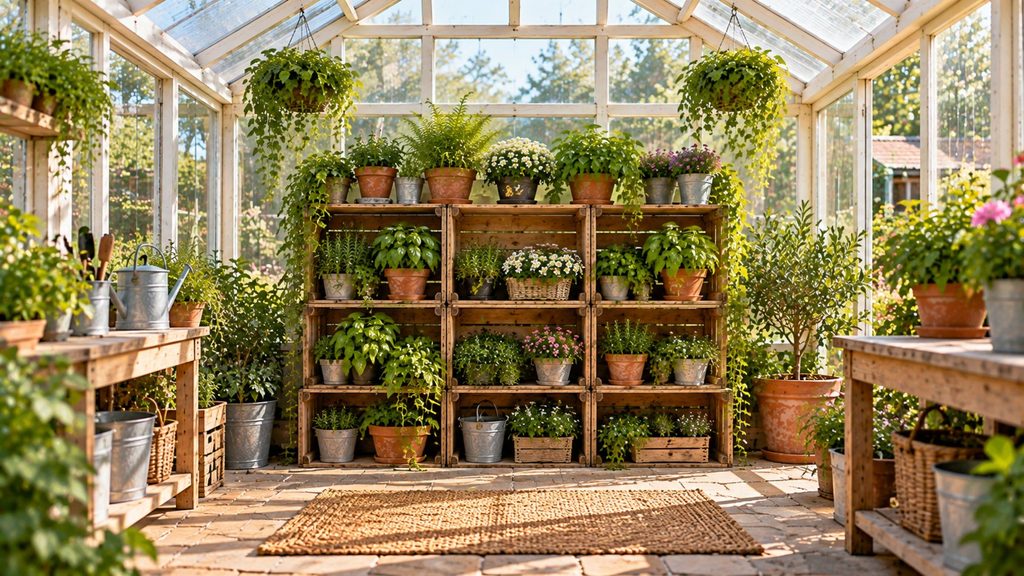
Wooden crates make cute and cheap shelves. Stack them on their sides, and each one becomes a little cubby for a plant.
Sand the rough edges and seal the wood so it can handle water. Then screw the crates together so the stack stays steady.
You can line them up in a row or stack them like building blocks. Mixing up the layout gives your greenhouse a fun, friendly look.
10. Pipe and Plank Shelves
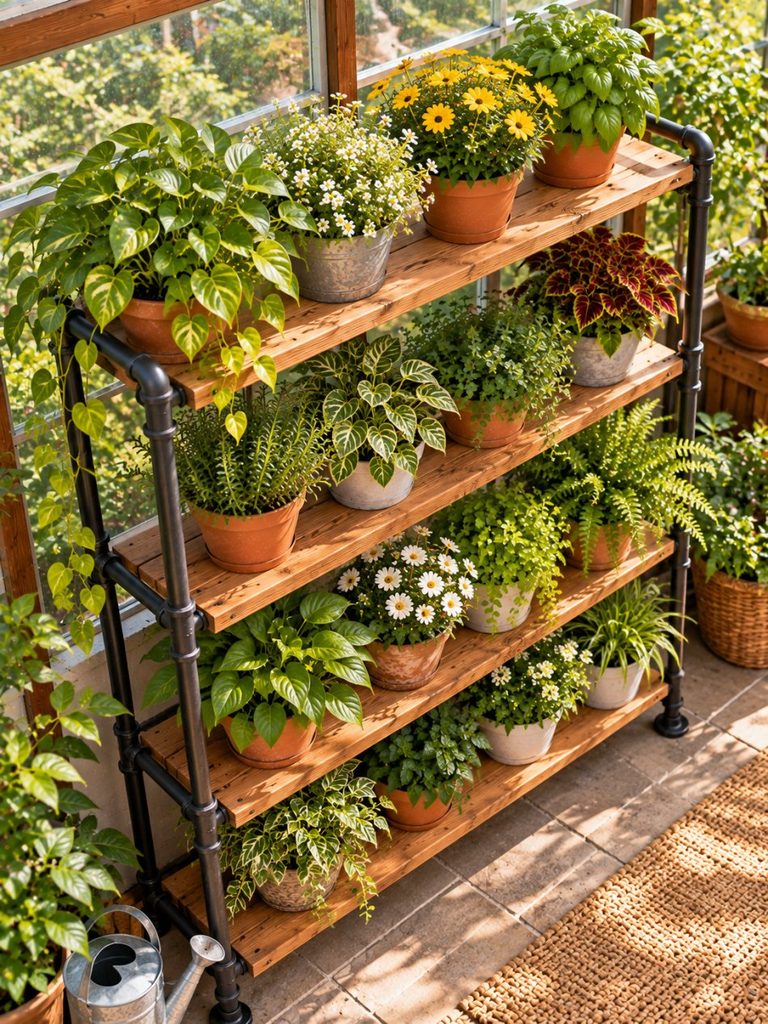
This shelf uses metal pipes for the frame and wooden boards for the shelves. It has a modern look, and it can hold a lot of weight.
Connect the pipes with fittings to make the posts and supports. Then set the planks on top and tighten everything so it doesn’t wiggle.
Pick pipes with a rust-resistant coating, since a greenhouse is damp. It’s a strong choice for big pots and heavy trays.
11. Bookcase Conversion
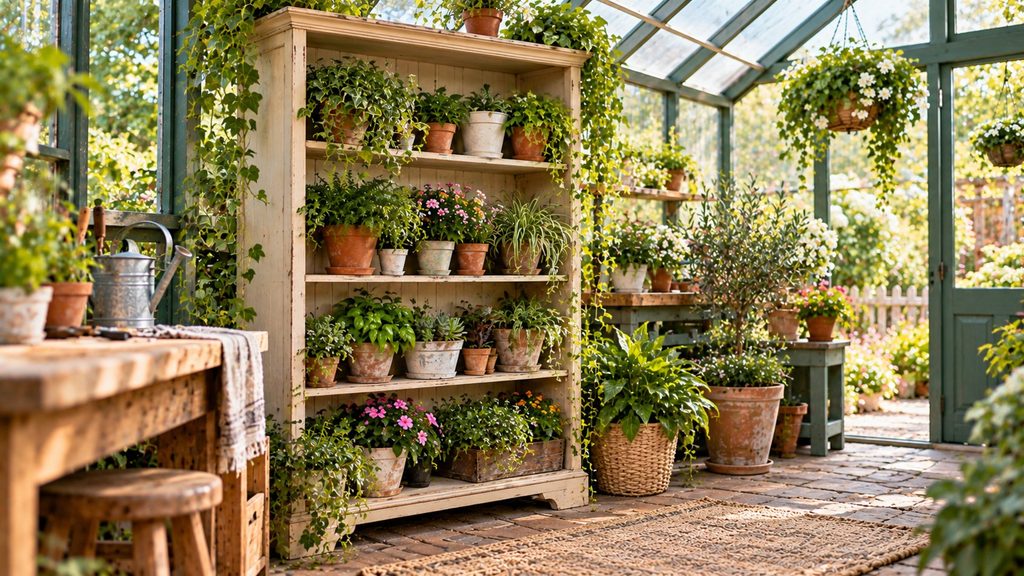
An old bookcase can get a second life as a plant stand. It already has shelves, so most of the work is done for you.
Seal the wood well with a water-safe finish so it won’t rot. Then check that the shelves are strong enough to hold wet soil and pots.
Set the bookcase where it gets plenty of light. Leave a little room between the pots so air can move around the plants.
A bookcase is great for herbs, seedlings, and small flowers. It also keeps all your little pots neat and easy to find.
12. Rolling Cart Shelves
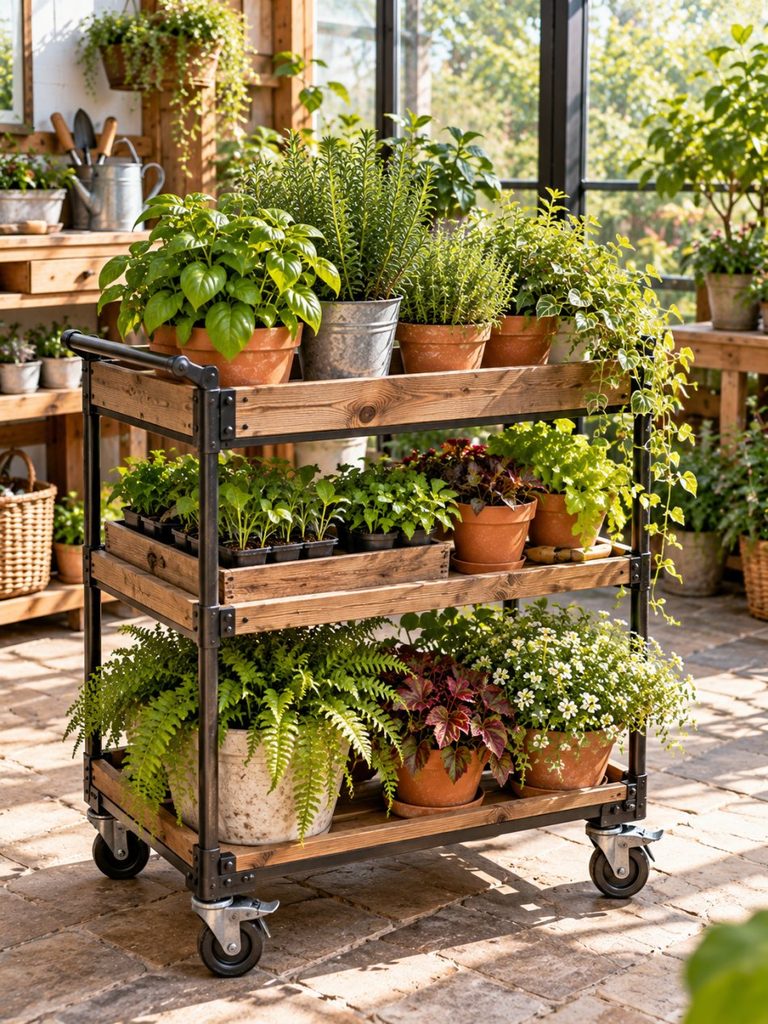
A rolling cart is a shelf with wheels, so you can move it wherever you need it. It’s handy when you want to clean, rearrange, or follow the sun.
Add sturdy wheels to the bottom of a shelf frame. Choose wheels with locks so the cart stays still when you want it to.
Keep the heavier pots on the bottom shelf. That way the cart stays steady and doesn’t tip over.
Also Read: 18 Low-Cost Raised Vegetable Garden Ideas
13. A-Frame Shelf
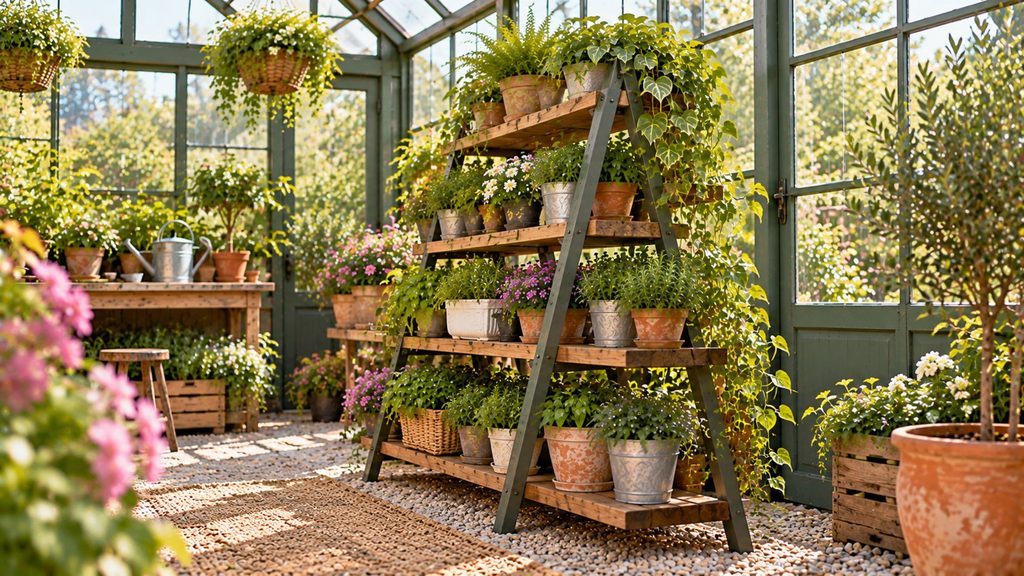
An A-frame shelf is shaped like the letter A, with steps on both sides. That means you can grow twice as many plants in the same small spot.
Build two sloped sides and join them at the top with a strong hinge or brace. Then add boards across each side to make the steps.
Put it in the middle of your greenhouse, where both sides can catch the light. Turn it now and then so every plant gets its share of sun.
14. Gutter Shelves
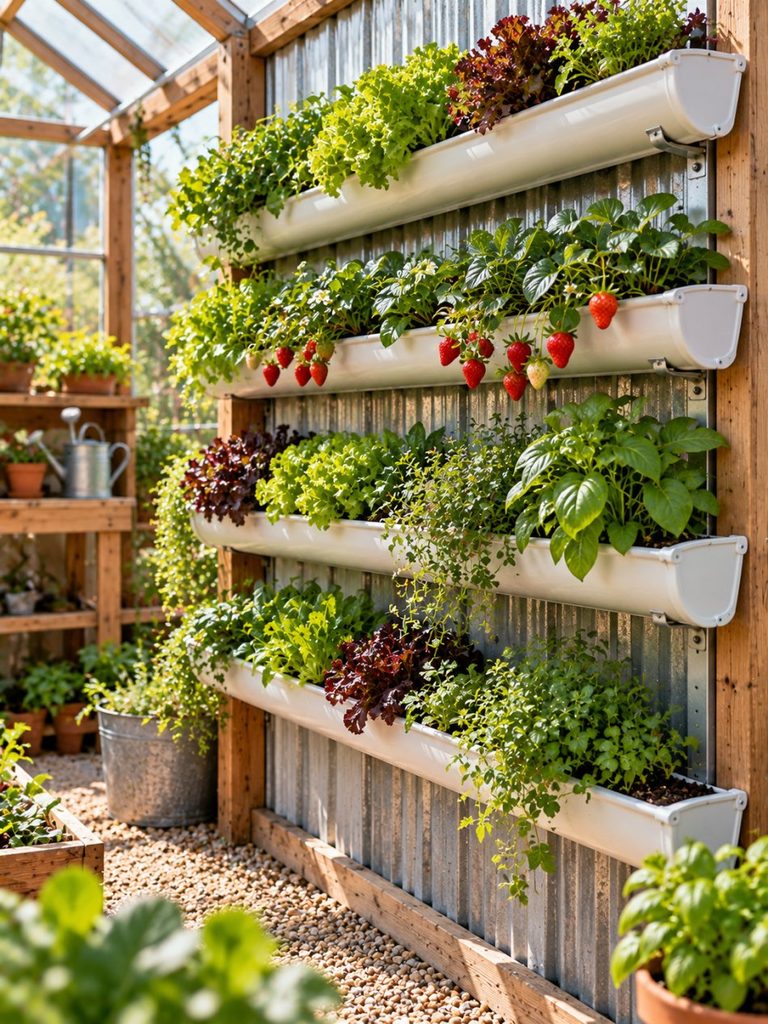
Rain gutters aren’t just for roofs. Fix them to the wall, fill them with soil, and you have a neat row of planters that take up very little room.
Drill a few small holes along the bottom so extra water can drain out. Then seal the ends with caps so the soil stays put.
These shelves work great for lettuce, herbs, and strawberries. Their roots don’t need much depth, so a thin gutter is plenty.
Stack two or three gutters, one above the other, to make a green wall. It looks pretty and gives you a lot of growing space.
15. Hanging Basket Shelf
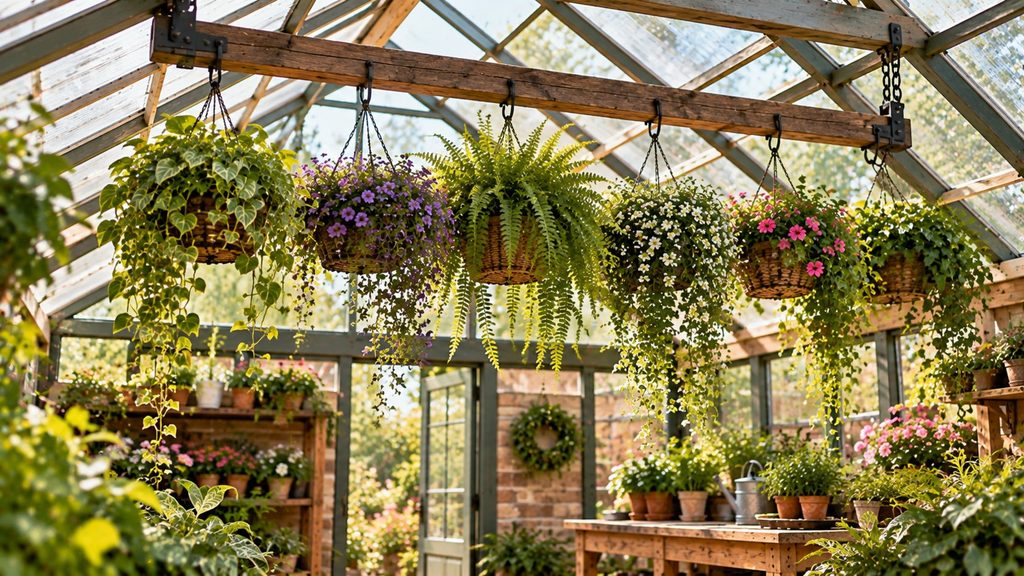
Sometimes the best space is right up near the roof. A bar fixed there can hold baskets and free up your shelves and floor.
Attach a strong bar to the roof frame, and make sure it’s tight. Then hang your baskets from hooks so they can swing free and stay in place.
Trailing plants love this spot, since their stems can hang down and spill over the sides. Ferns, ivy, and strawberries all do well here.
Water these baskets with care, because they dry out faster up high. Check them often so the soil never gets too dry.
16. Slatted Wood Shelves
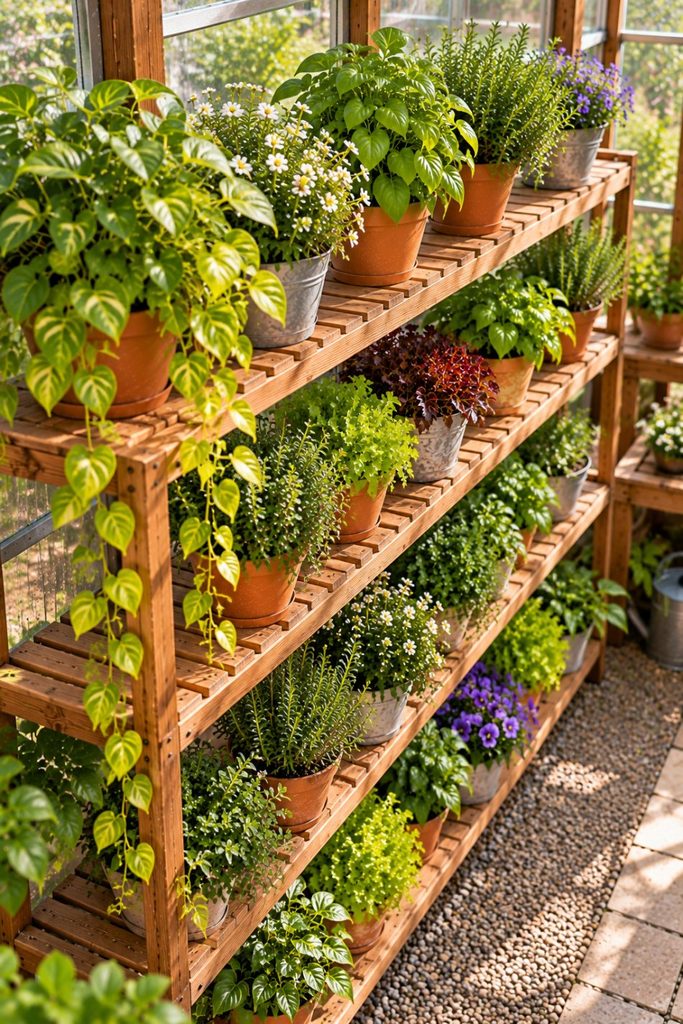
Slatted shelves are made with small gaps between the boards. Those gaps let air move freely and let extra water drain away.
Leave about a finger’s width between each board. That’s enough space for drainage, but small enough that pots won’t tip through.
Use cedar or treated wood so the shelf can handle damp air. Sand it smooth and seal it, and it will last for many seasons.
17. Bench with Lower Shelf
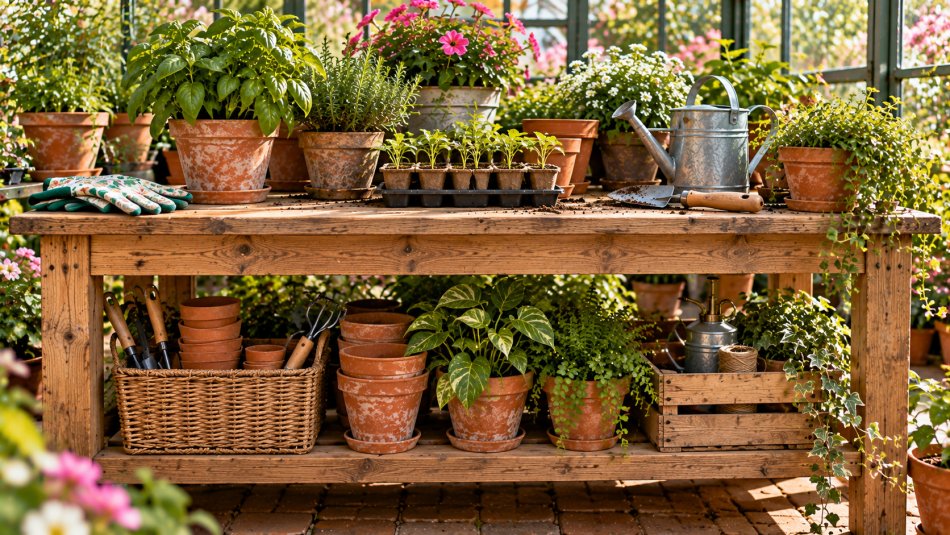
A bench with a second shelf underneath gives you two spots in one. The top works as a place to start seeds, and the bottom holds extra pots and tools.
Build a strong frame with four legs, then add a board at the top and another near the bottom. Make sure both boards are level and firmly attached.
Choose a height that feels good on your back. Then you can plant and water without bending over too much.
Keep the lower shelf for shade-loving plants or storage. It’s a smart way to use the space under the bench.
18. Old Window Frame Shelf
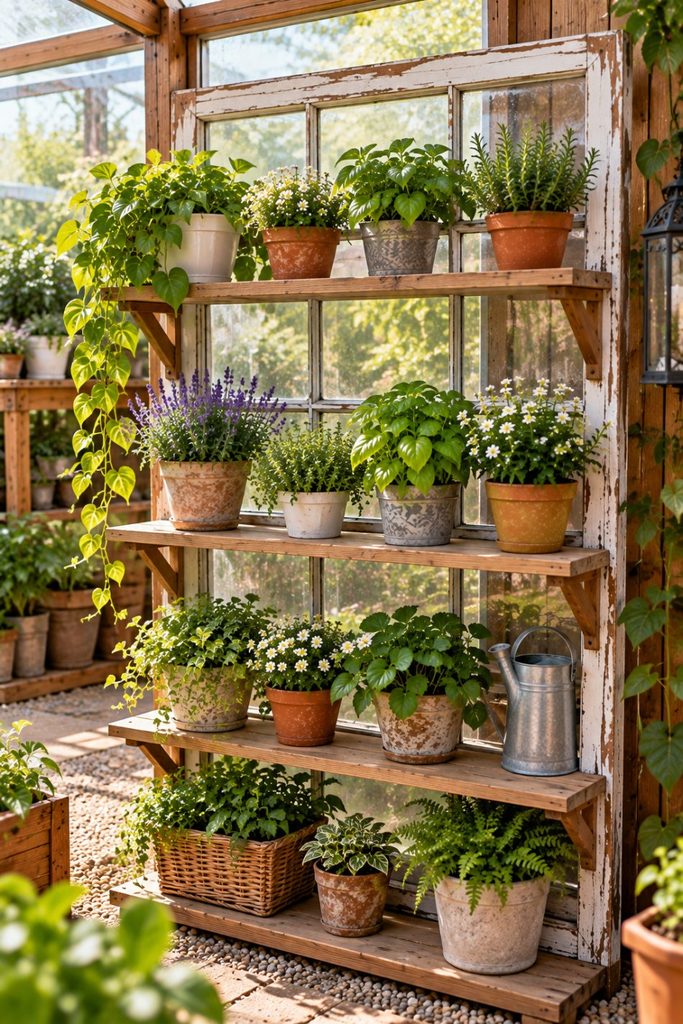
An old window frame can be the back of a cute shelf. It costs almost nothing, and it adds a little charm to your greenhouse.
Clean the frame well and sand off any loose paint. Then attach boards across it to make the shelves.
Set the frame against a wall or a sunny spot. The glass or open panes let light pass through so your plants get plenty of it.
Use small pots, herbs, and seedlings here, since the frame isn’t made for heavy loads. It’s a lovely way to give old things a new life.
Check this: 18 Creative DIY Recycled Trellis Ideas on a Budget
19. Tin Can Shelf
Tin cans are a fun way to grow tiny plants. Screw them onto a board or right onto the wall, and each one becomes a small planter.
Clean the cans well and poke a few holes in the bottom for drainage. Smooth any sharp edges so no one gets scratched.
Paint them bright colors if you like. They look cheerful, and they help you tell your plants apart.
20. PVC Pipe Shelves
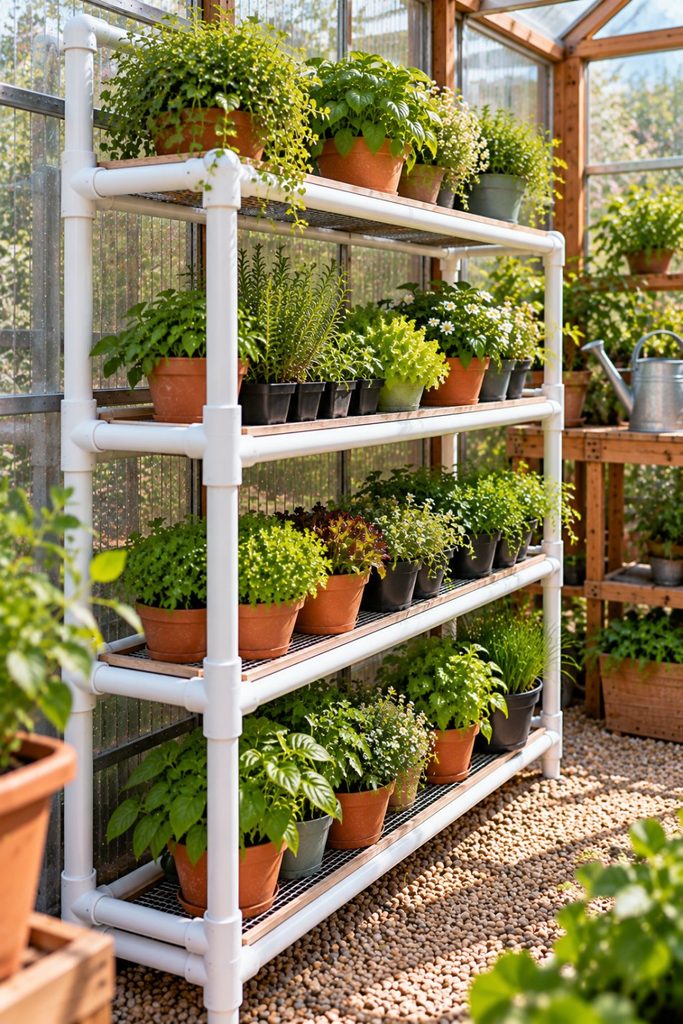
PVC pipe is light, cheap, and never rots, which makes it great for a damp greenhouse. You can cut it to size and build almost any shape you like.
Join the pipes with simple fittings to make the frame, then add boards or mesh for the shelves. No welding or special tools are needed.
Keep the loads light, since PVC can bend under heavy pots. Small plants, seedlings, and herbs are a good fit.
21. Step Stool Shelf
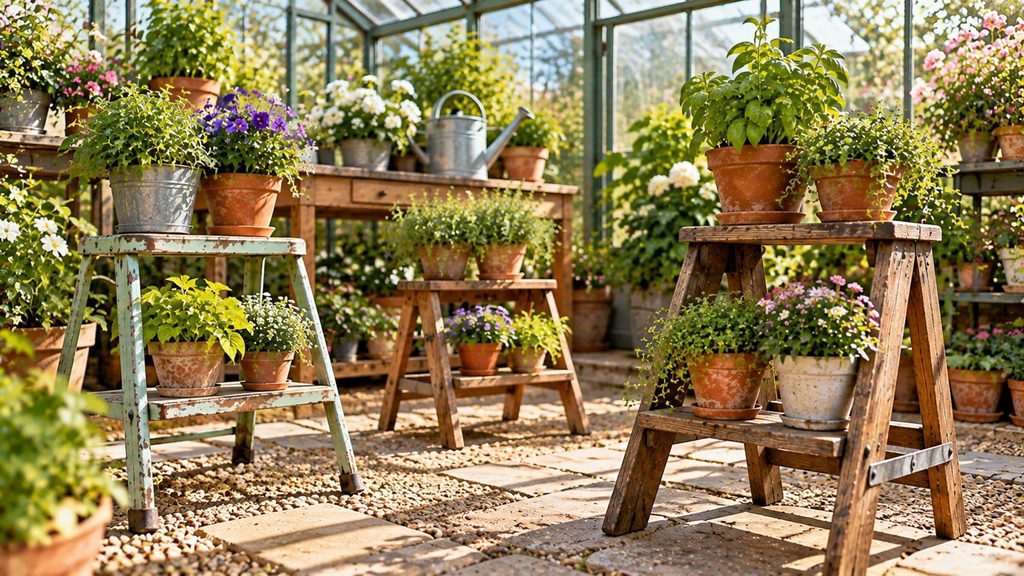
An old step stool can work as a small shelf that’s ready to go. Set a few of them around your greenhouse, and each one holds a pot or two.
Check that each stool is sturdy and doesn’t wobble. Seal the wood or wipe down the metal so it can handle damp air.
Step stools are easy to move, so you can shift them to follow the sun. They’re great for small herbs, flowers, and seedlings.
22. Vertical Pocket Shelf
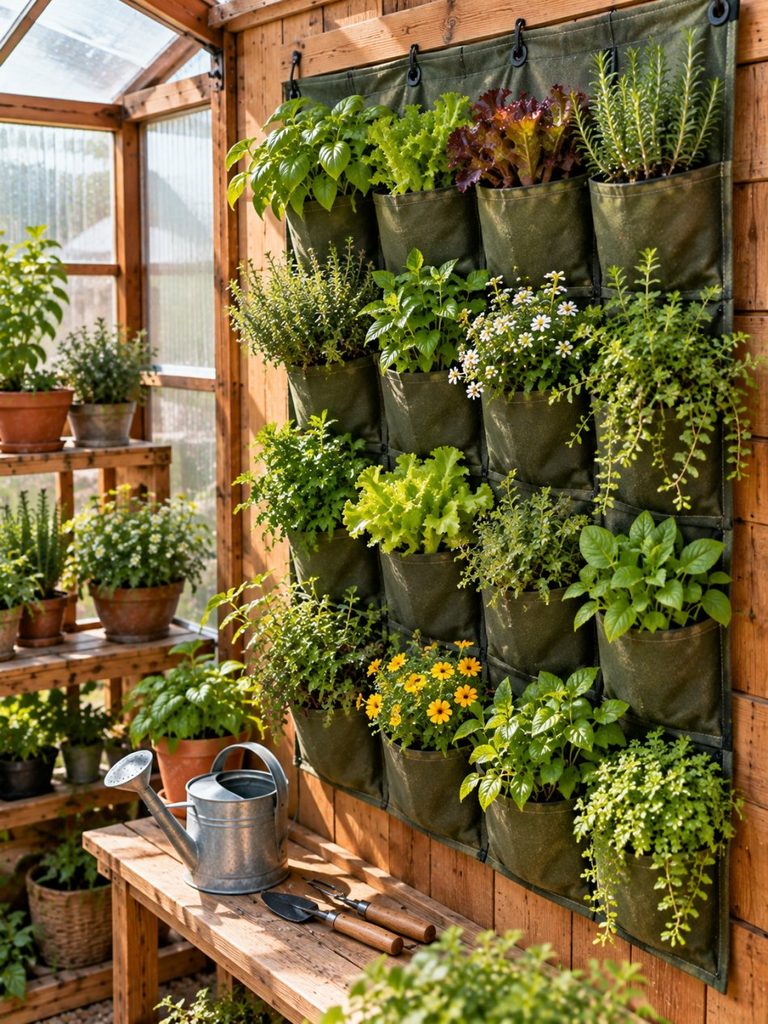
A vertical pocket shelf is a fabric or felt organizer hung on the wall. Each pocket holds a small plant, so it’s perfect for tight spots.
Pick a organizer made from thick, water-safe fabric, and hang it from strong hooks. Make sure it’s fixed well, since wet soil can get heavy.
Fill each pocket with soil and add herbs, lettuce, or small flowers. Water gently so the extra drips out without soaking the plants below.
Because it hangs on the wall, it uses no floor space at all. It’s a neat way to grow a lot in a very small area.
Conclusion
A crowded greenhouse doesn’t need a bigger space, just smarter shelves. With a little wood, some rope, or even an old ladder, you can turn bare walls and corners into places for plants to grow.
Pick the ideas that fit your space, your budget, and the plants you love. You can mix a few styles, like a bench below and hanging baskets above, to use every inch.
Grab your tools and start with one simple shelf this weekend. Before long, your greenhouse will be neat, full of light, and packed with happy plants.