Cow manure can be a great helper for your tomato plants. Tomatoes love rich soil, and cow manure gives them plenty of it.
It adds food that helps plants grow strong and green. It also makes the soil softer, so roots can spread out with ease. That means healthier plants and more tomatoes for you.
There is one catch to know about. Fresh manure is too strong and can burn the roots. It can also carry germs that you don’t want near your food.
The trick is to use old, well-rotted manure. In this post, we’ll show you how to use it the right way. Your tomato plants will thank you!
Is Cow Manure Good for Tomato Plants?
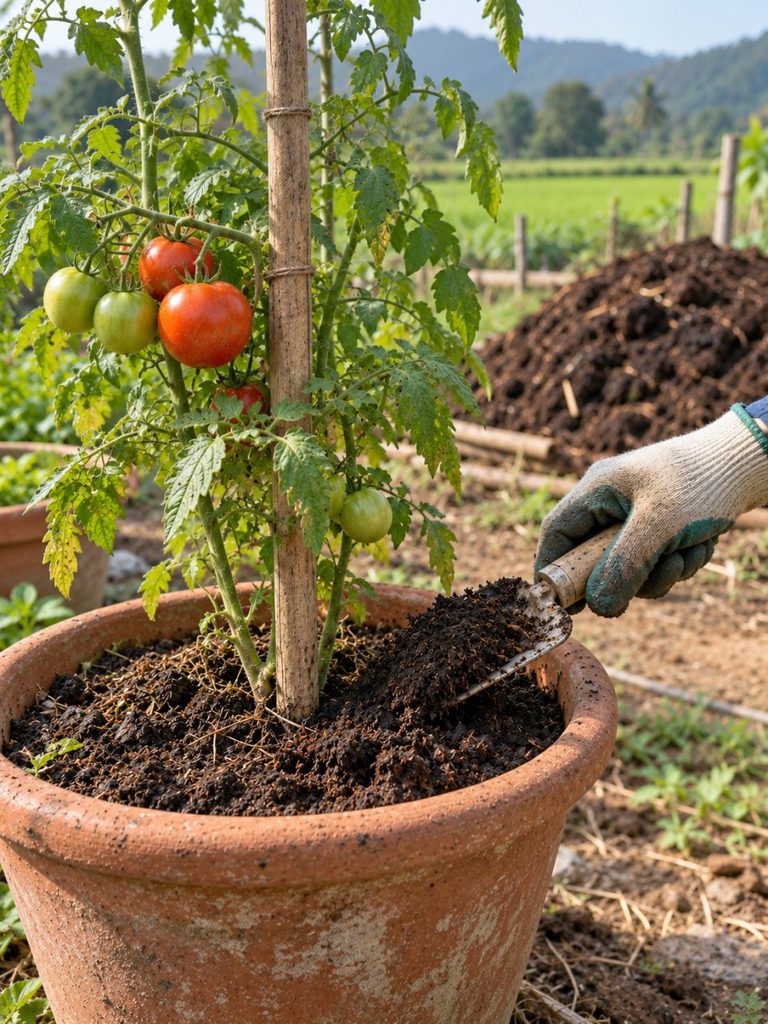
Yes, cow manure is a good and gentle food for tomato plants. It has a little nitrogen, phosphorus, and potassium, which help plants grow leaves, roots, and fruit. It also keeps the soil soft, loose, and able to hold water.
Always use manure that has rotted for at least six months. Good manure looks dark and crumbly and smells like fresh earth, not like a barn.
Rotting makes it safer and stops it from burning the roots. Mix a thin layer into the soil two to four weeks before you plant your tomatoes.
Do not use too much, or you may get big, leafy plants with very few tomatoes. Water the soil well after you add it, so the food can sink down to the roots.
Also Read: How Long Do Tomatoes Take to Grow from Seed?
Why Tomatoes Love Cow Manure?
Tomatoes are hungry plants. They need lots of food to grow big and make juicy fruit, and cow manure is a gentle way to feed them.
Cow manure has a little nitrogen, phosphorus, and potassium. These help the plant grow strong leaves, healthy roots, and tasty tomatoes.
It also makes the soil soft and fluffy, so roots can spread out easily. The soil holds water better too, which keeps your plants from drying out.
Cow manure feeds the tiny helpers that live in the soil. These helpers break down food so your tomato plants can use it.
What Nutrients Does Cow Manure Have?

Cow manure has three main plant foods: nitrogen, phosphorus, and potassium. Gardeners often call them N, P, and K. Each one does a special job for your tomato plants.
Cow manure also has tiny bits of other helpful things, like calcium and magnesium. These extra goodies help your tomato plants stay strong all season.
Here is a simple breakdown of what each one does for your tomato plants:
- Nitrogen (N): Helps the plant grow green, leafy stems. Too little makes leaves turn pale or yellow. Too much gives you lots of leaves but fewer tomatoes.
- Phosphorus (P): Helps roots grow strong and deep. It also helps the plant make flowers, and flowers turn into tomatoes.
- Potassium (K): Helps the plant make sweet, healthy fruit. It also helps the plant stay strong against heat, dry spells, and sickness.
- Why “a little” matters: Cow manure has small amounts of all three. It feeds your plants slowly and gently, so it is much less likely to burn them.
Fresh vs. Aged Cow Manure
Fresh cow manure is brand new and still very strong. It has a lot of nitrogen, which can burn tomato roots and hurt your plants.
Fresh manure can also carry germs that you don’t want near food. Tomatoes grow close to the soil, so this matters a lot.
Aged manure has had time to rot, usually six months or more. It turns dark and crumbly, smells like fresh earth, and is gentle on plants.
Always pick aged manure for your tomato plants. If you only have fresh manure, let it sit in a pile for a few months first.
Why fresh manure can burn roots?
- It is very strong. Fresh manure has a lot of ammonia, a form of nitrogen that is too harsh for roots. It acts like giving a plant way too much food at once.
- It has lots of salts. These salts pull water out of the roots, so the plant gets thirsty even when the soil is wet. This is what makes leaves look dry and scorched.
- It can get hot. Fresh manure keeps breaking down in the soil, and that makes heat that can hurt young roots.
- It can carry germs. Fresh manure may have germs that can make people sick, and tomatoes grow close to the soil.
Also Read: How Long Can a Tomato Plant Go Without Water?
Why aged manure is safe?
- The harsh stuff is gone. Over time, the ammonia turns into gentler food that plants can use slowly.
- The salts wash down. Rain and watering rinse many of the extra salts away.
- The heat is over. Once manure finishes rotting, it stops getting hot.
- Most germs die off. Time and the natural heat of rotting help get rid of them.
That is why aged manure feels like a soft, healthy snack for your tomatoes, while fresh manure is like a huge, heavy meal.
How to Tell If Manure Is Ready?

Ready manure looks dark brown, almost like rich soil. If it still looks wet, lumpy, or has bits of straw you can easily see, it needs more time.
It should feel crumbly and light in your hands. Good manure breaks apart easily and is not sticky or slimy.
Give it a quick sniff. Ready manure smells fresh and earthy, like a forest floor, and it should not smell sharp or strong like a barn.
It should also feel cool, not warm. If the pile is still warm in the middle, it is still rotting, so wait a little longer before using it.
How Much Cow Manure to Use?
A little goes a long way. Spread a thin layer, about one to two inches, over your garden bed and mix it into the top few inches of soil.
For pots and containers, use much less. Mix a small handful into the potting soil, so it makes up only a small part of the mix.
Too much manure can cause problems. Your tomato plants may grow big, leafy stems but make very few flowers and tomatoes.
Extra manure can also add too many salts to the soil, which can hurt the roots. When in doubt, use less, because you can always add more later.
When to Add It to the Soil?
The best time to add cow manure is two to four weeks before you plant your tomatoes. This gives the soil time to settle and take in the new food.
Spread the manure over the bed and mix it into the top few inches of soil. Then water it well so the food can start to soak in.
Waiting also keeps your young tomato plants safe. Even aged manure can be a bit strong for tiny roots right away.
You can also add manure in fall, after you finish harvesting. It will break down slowly over winter, and your soil will be ready for spring planting.
Must Read: Are Eggshells Good for Tomato Plants?
How to Mix It Into Garden Beds?

Start by clearing the bed of weeds, rocks, and old plant roots. Then spread a thin layer of aged cow manure, about one to two inches, over the top of the soil.
Use a garden fork or shovel to dig the manure into the top four to six inches of soil. Turn the soil over so the manure mixes in well and does not sit in clumps.
Rake the bed smooth when you are done. Break up any big lumps so the soil looks even and crumbly.
Water the bed well and let it rest for a couple of weeks before planting. Wear gloves while you work, and wash your hands when you finish.
Using Cow Manure in Pots and Containers
Pots hold much less soil than a garden bed, so you need much less manure. Mix just a small handful of aged cow manure into a big scoop of potting soil.
A good rule is to keep manure to about one part for every four or five parts of potting soil. This keeps the mix light, fluffy, and safe for roots.
Always use fully aged manure in pots. Roots have nowhere else to go, so strong or fresh manure can hurt them fast.
Make sure your pot has drain holes so extra water can escape. Water gently after planting, and check the soil often because pots dry out faster than garden beds.
Cow Manure Tea for Tomatoes
Cow manure tea is a gentle liquid food made by soaking aged manure in water. It gives your tomato plants a quick boost of nutrients between feedings.
To make it, put a few shovelfuls of aged manure in a cloth bag or old pillowcase. Soak it in a bucket of water for two to three days, stirring now and then.
- Before using it, mix the tea with more water until it looks like weak tea.
- Pour it on the soil around the plant, not on the leaves or fruit.
- Use it about once every two weeks. Wash your hands and your tomatoes well, and never use tea made from fresh manure.
Cow Manure vs. Compost
Cow manure and compost may look alike, but they are not the same. Manure comes from animals, while compost is made from rotted plants like leaves, grass, and kitchen scraps.
Cow manure gives your tomatoes more food, like nitrogen and potassium. Compost has fewer nutrients, but it is great at making soil soft and rich.
Compost is also safer to use because it has no animal waste in it. Aged manure is safe too, but it needs more care and more waiting time.
The best idea is to use both. Mix a thin layer of aged manure and some compost into your soil, and your tomatoes will get food and healthy soil together.
Important Tips
Always wear gloves when you handle manure. Manure can carry germs, so keep it away from your skin, and never touch your face while you work.
Wash your hands well with soap and water when you finish. Also wash your tools, boots, and anything else that touched the manure.
Wash your tomatoes well before you eat them, since they grow close to the soil. Do not use manure on tomatoes that are about to be picked.
Keep manure away from kids and pets, and store it in a covered spot. Never use fresh manure in your garden, and always use fully aged manure.
Here are more safety tips:
- Wear a mask when digging dry manure. Dust can float up and get into your nose and lungs.
- Cover cuts and scrapes. Put on a bandage and wear gloves so germs cannot get into your skin.
- Do not eat or drink while you work. Wait until you have washed your hands.
- Take off dirty shoes and clothes. Do this before you go inside, and wash your work clothes after.
- Keep manure away from water sources. Do not store it near wells, streams, or ponds, because rain can wash it into the water.
- Know where your manure comes from. Buy from a trusted farm or store, and ask if it is aged. Avoid manure from animals that were sick.
- Keep manure off the leaves and fruit. Pour water at the base of the plant so dirt does not splash up on your tomatoes.
- Mulch around your plants. A layer of straw keeps soil from splashing onto the fruit.
- Wait before you harvest. Many gardening groups say to add manure at least 90 to 120 days before you pick tomatoes that touch the soil.
- Store it safely. Keep manure in a covered bin or bag away from where you keep food or play.
Common Mistakes to Avoid
The biggest mistake is using fresh manure. It is too strong and can burn roots, so always use manure that has aged for at least six months.
Another mistake is adding too much. A thick layer can give you big, leafy plants with very few tomatoes, so stick to a thin layer.
Many gardeners also forget to wait before planting. Add the manure two to four weeks early, so the soil has time to settle and your young plants stay safe.
Some gardeners skip washing and safety steps. Always wear gloves, wash your tomatoes, and keep manure off the leaves and fruit.
Signs You Used Too Much
One clear sign is lots of big, dark green leaves but very few flowers. The plant is putting all its energy into growing leaves instead of making tomatoes.
- You may also see leaf tips that look brown, dry, or crispy. This often happens when there are too many salts in the soil.
- Other signs are slow growth, wilting even when the soil is wet, or small and weak fruit.
- Too much manure can make it hard for roots to take in water.
If you see these signs, stop adding manure and water the soil deeply to wash away extra salts. Your plants should slowly bounce back.
Check this: Why Are My Tomato Seedlings Wilting or Dying?
Conclusion
Cow manure is a good and gentle food for tomato plants. It gives them nutrients, makes the soil soft, and helps the tiny helpers in the soil do their job.
The key is to use it the right way. Pick aged manure, use a thin layer, and add it two to four weeks before planting.
Stay safe by wearing gloves and washing your hands and tomatoes. With a little care, cow manure can help you grow healthy plants and lots of juicy tomatoes.